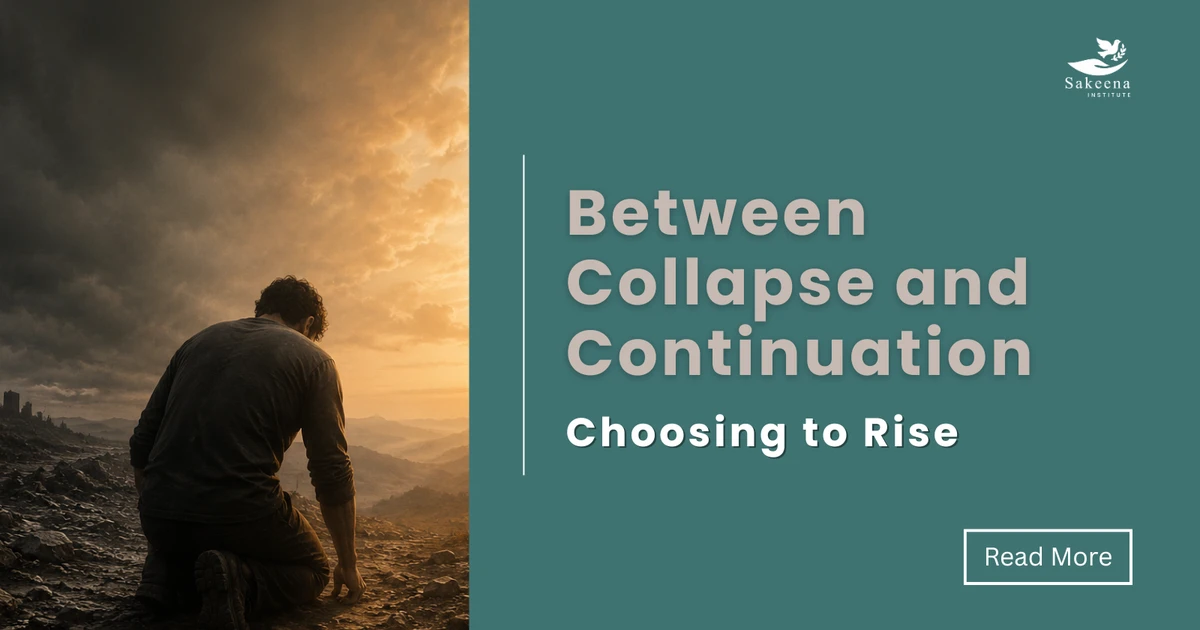

Our religion urges us to continue fighting within the circumstances, not without. The point isn’t to get rid of the issue, but to succeed despite the issue.
The devils won’t stop fighting you, your own mind won’t stop fighting you, people won’t stop fighting you. The point is to fight back, not distract yourself from the issue with mindless entertainment and pointless activities.
Work won’t stop coming and chores won’t stop existing. The point isn’t to wait for when you have free time, the point is to free up your time. The point is to hold on to those extra prayers and your recitation even when you’re incredibly busy and everything is hectic and all over the place and it feels like there’s barely enough time to breathe and even when your soul and body feel so heavy.
What is heaven for if not for that daily fight? If not for that daily battle?
And so it’s important to be stubborn in this case. Absolutely stubborn and unrelenting. To tell yourself “I will memorize despite my tiredness. I will pray those sunnah prayers despite my exhaustion.”
There will be days where you won’t be able to fulfill your worship and duties to the best of your capabilities. But you continue to fight the good fight anyway.
If you can’t do a full page of the Quran, do half a page. If you can’t do half a page, do one quarter. If even that is tough, do one ayah.
If you can’t pray the sunnah prayers standing up, then you do it sitting down. If you missed your athkar, you try again tomorrow. If you mistreated your family, you apologize and try to do better.
The point is to never, ever stop fighting. To never stop moving forward in your path to Allah. To always scramble to get up quickly the moment you trip. And to do that again, then again, then again and again.
Because if you stop, if you give up for one split second, then you’ve lost the most precious gem, which is the faith deep in your heart. And what a great, unbearable loss that would be.
And this is where Islamic psychology gives language to what the heart already experiences in struggle.
In Islamic understanding, the human being is not one simple layer of willpower, but a layered inner world. There is the nafs, which pulls toward comfort, distraction, and immediate relief. There is the qalb, the heart, which is constantly turning and being shaped by what it is exposed to. And there is the ruh, the spirit, which longs for its source and recognizes truth even when the rest of the self is overwhelmed.
The tension a person feels in worship, consistency, and discipline is often this internal structure in motion rather than a simple matter of “strong” or “weak” people.
When exhaustion makes worship feel heavy, Islamic psychology does not interpret that as hypocrisy or failure of character. It is often understood as the weight of the nafs resisting what elevates it. The nafs is not inherently evil, but it is self-centered by default. It prefers what is easy, familiar, and immediately rewarding. So when a person pushes toward prayer, recitation, or discipline, resistance naturally appears. That resistance is expected, not abnormal.
Even what people often call “distraction” has a place in this framework. Constant noise, scrolling, and mental avoidance are not just bad habits in isolation, but also expressions of a mind trying to regulate discomfort. The issue is not simply that the nafs seeks pleasure, but that it learns to avoid stillness because stillness forces reflection, and reflection forces accountability. Islamic psychology would describe this as the heart becoming clouded, not destroyed, which is an important distinction because something clouded can still be cleared.
This is also why the concept of tazkiyah (the purification of the self) is never presented as a single leap into perfection. It is described as a gradual process of refinement where the nafs is trained, not erased, and the heart is polished through repeated return.
Even slipping, when followed by sincere return, becomes part of that refinement. The struggle itself becomes meaningful rather than wasted.
From this perspective, consistency in worship is not about maintaining a constant emotional high or uninterrupted motivation. It is about training the self to act even when the internal state is heavy.
Islamic psychology recognizes that actions are not always the result of feeling, but often the cause of future feeling. A heart that is repeatedly brought back into prayer, even reluctantly, slowly becomes more responsive over time.
So the daily battle is not a sign of dysfunction in the believer’s inner world. It is actually the space where transformation happens. The push and pull between nafs and qalb is not something to be eliminated, but something to be directed, until the heart learns, over time, that its true relief was never in escape, but in return.