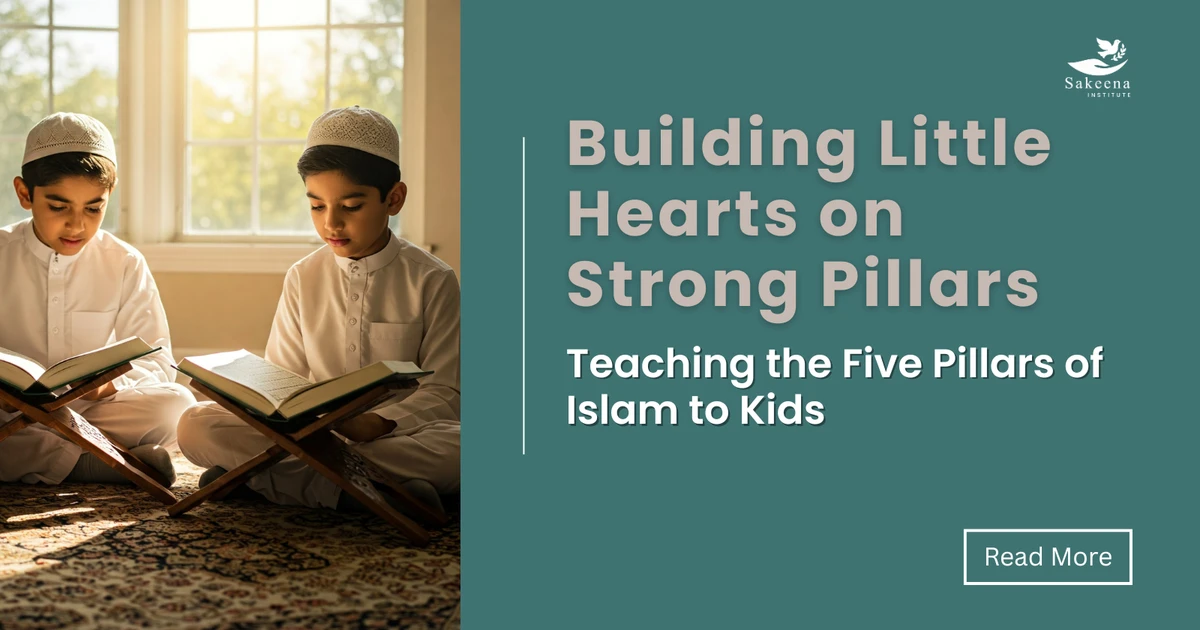

One of the first and most important steps in a child’s Islamic learning journey is introducing the Five Pillars of Islam in a way that feels simple, clear, and engaging.
When children learn these foundations early on, they don’t just memorize concepts. They begin to absorb values like sincerity, kindness, discipline, gratitude, and a sense of belonging to a wider Muslim community. The Five Pillars are the core acts of worship that shape a Muslim’s daily life and presenting them in a child-friendly way helps nurture both understanding and love for the faith.
The Five Pillars of Islam for Kids: A Simple Explanation
A helpful way to explain the Five Pillars is to compare them to the strong pillars that hold up a building. Just as a house needs solid supports to stand firm, a Muslim’s faith is strengthened by these five essential practices.
Each pillar carries an important lesson: belief in Allah, consistency in prayer, generosity toward others, patience and self-control, and devotion to Allah through pilgrimage.
What Are the Five Pillars of Islam for Kids?
Parents often wonder where to begin when teaching young children. The Five Pillars of Islam are the first and most important acts of worship to introduce:
Shahada (Faith)
Believing that there is no god but Allah, and that Prophet Muhammad (PBUH) is His messenger. This is the foundation of a Muslim’s faith and identity.
Salah (Prayer)
Praying five times a day to stay connected to Allah and maintain a sense of structure and mindfulness throughout the day.
Zakat (Charity)
Giving a portion of what one has to those in need, teaching generosity, empathy, and social responsibility.
Sawm (Fasting)
Fasting during Ramadan to develop patience, gratitude, and self-discipline.
Hajj (Pilgrimage)
Traveling to Makkah at least once in a lifetime if physically and financially able, symbolizing unity and devotion to Allah.
Together, these pillars help children understand how faith is lived, not just learned.
Understanding the Five Pillars Through Simple Examples
Children connect better when ideas are linked to real life. These simple examples make the concepts easier to understand:
Shahada example for kids
Repeating the declaration of faith and learning what it means to believe in one God.
Salah example for kids
Praying alongside parents at home or in the mosque and gradually building consistency.
Zakat example for kids
Sharing toys, books, or clothes with others to understand the meaning of giving.
Sawm example for kids
Practicing short fasts during Ramadan to experience patience and empathy.
Hajj example for kids
Watching videos or stories about Muslims traveling to Makkah and learning about the pilgrimage experience.
These everyday connections help turn abstract ideas into lived understanding.
Fun Activities to Teach the Five Pillars
Learning becomes more meaningful when it’s interactive and enjoyable. A few simple activities can make a big difference:
- Drawing and labeling the Five Pillars
- Creating colorful pillar charts
- Matching games linking each pillar to its meaning
- Storytelling sessions about the Prophet Muhammad (PBUH)
- Flashcards for quick review and memorization
- Simple quizzes to reinforce learning in a fun way
These activities help children engage with Islamic teachings naturally, without feeling overwhelmed.
Building a Simple Lesson on the Five Pillars
Parents and teachers don’t need complex tools to teach effectively. Just consistency and creativity.
- Storytelling: Children remember stories more than explanations
- Visual aids: Posters, drawings, and charts support memory
- Islamic history stories: Introduce inspiring figures in a simple way
- Daily life connections: Link lessons to real routines and experiences
Institutions like the Sakeena Institute also provide structured support for families who want guided learning resources.
Printable Resources for Learning
Printable materials can make learning more hands-on and engaging:
- Coloring pages for each pillar
- Flashcards with simple definitions
- Posters for home or classroom use
- Worksheets with matching or fill-in-the-blank activities
These tools allow children to learn through interaction, play, and repetition.
Videos and Interactive Learning
Many children learn best through visual content. Educational videos that explain the Five Pillars using animation, storytelling, or songs can make the concepts easier to grasp and more enjoyable to revisit.
Teaching Through Everyday Life
The strongest lessons often come from daily practice:
- Praying together as a family
- Talking about Ramadan and its meaning
- Encouraging small acts of charity
- Sharing Islamic stories before bedtime
These simple habits help children see Islam as a lived experience, not just a subject to study.
Conclusion
Teaching the Five Pillars of Islam to children is one of the most meaningful ways to build a strong foundation of faith, character, and identity. With patience, creativity, and consistent guidance, parents can make Islamic learning both joyful and lasting.
Families can nurture a generation that understands and lives its faith with confidence and love.