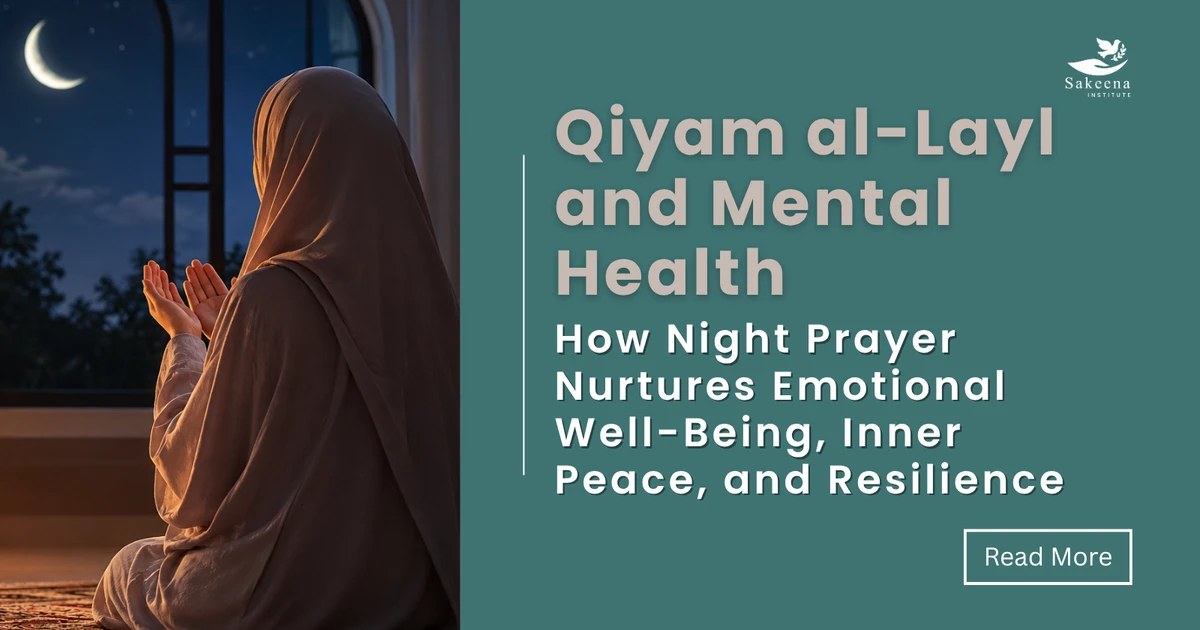

The human heart needs more than temporary distractions to find lasting peace. While we often look for comfort in changing our circumstances, resolving our problems, or finding reassurance from those around us, Islam teaches us that one of the greatest sources of tranquility is found in strengthening our relationship with Allah. Our emotional well-being is deeply connected to our spiritual lives, and the way we respond to difficulties is often shaped by the strength of our faith, our understanding of Allah's wisdom, and our ability to place our trust in Him. Among the most beautiful acts of worship that nurture this connection is Qiyam al-Layl, the voluntary night prayer, which offers a believer an opportunity to step away from the noise of the world and stand before Allah in the stillness of the night.
The importance of Qiyam al-Layl in Islam extends far beyond the reward of an additional prayer. It is an act of devotion that cultivates sincerity, strengthens reliance upon Allah, and gives the heart space to process its fears, hopes, and difficulties through worship. While night prayer should never be presented as a replacement for professional mental health care, its spiritual and emotional dimensions can offer meaningful support for those seeking greater emotional resilience and inner peace.
1. Finding Peace Away from the Noise of Everyday Life
One of the defining characteristics of modern life is the constant presence of stimulation. From notifications and social media to professional responsibilities, family obligations, and an endless stream of information, our minds rarely experience genuine stillness. We move from one responsibility to another, often without allowing ourselves the time to reflect on what we are feeling or reconnect with what truly matters.
Qiyam al-Layl introduces a different rhythm into our lives. It invites us to leave our beds, step away from worldly distractions, and dedicate a portion of the night to standing before Allah. There are no expectations to meet, no conversations to maintain, and no responsibilities demanding our immediate attention. It is simply a believer standing before the One who knows every hidden thought and every unspoken concern.
Allah سبحانه وتعالى describes the night as a time of particular spiritual significance:
إِنَّ نَاشِئَةَ اللَّيْلِ هِيَ أَشَدُّ وَطْئًا وَأَقْوَمُ قِيلًا
"Indeed, the hours of the night are more effective for concurrence [of heart and tongue] and more suitable for words." (Qur'an 73:6)
The stillness of the night allows for a different quality of attention and reflection. Without the interruptions of daily life, a person may find it easier to concentrate on their recitation, reflect upon the meanings of the Qur'an, and become more aware of their relationship with Allah. This intentional pause can also encourage mindfulness, emotional awareness, and a healthier relationship with the demands of everyday life.
2. Strengthening Emotional Resilience Through Tawakkul
A significant source of emotional distress is the desire to control outcomes that are ultimately beyond our control. We worry about the future, replay past experiences, anticipate difficulties, and sometimes exhaust ourselves trying to find solutions to matters that have not yet unfolded. Although planning and taking practical steps are important, Islam teaches us that our responsibility is to make an effort while leaving the outcome to Allah.
Tawakkul, or reliance upon Allah, is not passive resignation; it is the conscious decision to trust His wisdom while continuing to fulfill our responsibilities. Qiyam al-Layl provides an opportunity to nurture this reliance, particularly when we bring our worries, uncertainties, and personal struggles into our supplications.
When we raise our hands in the middle of the night, we are reminded that we are not responsible for carrying the entire weight of our lives alone. We can ask Allah for what seems impossible, seek His guidance when we cannot see the way forward, and place our fears before Him without worrying about how our words will sound.
Allah سبحانه وتعالى says:
وَمَن يَتَوَكَّلْ عَلَى اللَّهِ فَهُوَ حَسْبُهُ
"And whoever relies upon Allah, then He is sufficient for him." (Qur'an 65:3)
This understanding can help reduce the emotional burden associated with uncertainty. It does not mean that a believer will never experience anxiety, sadness, or fear, but that these emotions do not have to exist without hope. Through Qiyam al-Layl, we repeatedly remind ourselves that our circumstances are not beyond Allah's knowledge, power, or mercy.
3. The Healing Power of Du'a and Emotional Expression
Not every feeling is easy to articulate. There are worries we hesitate to share, disappointments we struggle to explain, and personal battles that remain hidden even from those closest to us. Sometimes, we do not even understand exactly what is troubling us; we only recognize the heaviness it leaves behind.
One of the beautiful aspects of Islam is that it encourages us to turn to Allah with complete honesty. We do not need to organize our thoughts perfectly or find the most eloquent expressions before making du'a. Allah already knows what is within our hearts, and He invites us to call upon Him.
Qiyam al-Layl creates a special opportunity for this intimate form of communication. A person can pause after their prayer, make du'a in their own words, ask for forgiveness, express gratitude, or simply admit their weakness before Allah. This process of acknowledging our emotions rather than suppressing them can be valuable for emotional well-being.
The Prophet ﷺ said:
"Every night, when one-third of the night remains, our Lord, the Blessed and the Exalted, descends to the lowest heaven and says: Who is calling upon Me so that I may answer him? Who is asking Me so that I may give him? Who is seeking My forgiveness so that I may forgive him?"
(Sahih al-Bukhari 1145; Sahih Muslim 758)
Consider the mercy contained in this invitation. The believer is not required to wait until life becomes difficult to approach Allah, nor must they become free of shortcomings before standing in prayer. The door of supplication remains open, inviting us to ask, seek, and return. This awareness can cultivate hope and provide spiritual reassurance during emotionally challenging periods.
4. Developing Gratitude and Shifting Our Perspective
When someone is struggling emotionally, their attention can naturally become concentrated on what is missing, what has gone wrong, or what they fear might happen next. This does not mean that their difficulties are insignificant or that they should simply ignore their pain. Rather, it highlights the importance of developing a perspective that allows us to recognize hardship without becoming entirely consumed by it.
Qiyam al-Layl and gratitude are closely connected through the opportunity night prayer provides for reflection. As we recite the Qur'an and make du'a, we are reminded of the countless blessings that may become less noticeable when we are preoccupied with our difficulties. The ability to pray, the gift of guidance, the presence of loved ones, the opportunity to repent, and the countless ordinary provisions of everyday life are all reasons to praise Allah.
The Prophet ﷺ demonstrated this relationship between gratitude and night worship. When his feet became swollen from standing in prayer, he was asked why he continued to do so when Allah had forgiven his past and future shortcomings. He replied:
"Should I not be a grateful servant?"
(Sahih al-Bukhari 4837; Sahih Muslim 2819)
His response teaches us that worship is not only an expression of need; it is also an expression of love and gratitude. Through night prayer, we learn to recognize Allah's blessings even when our circumstances are difficult. Gratitude does not erase sadness, but it can help us develop a more balanced perspective and recognize that hardship and blessings can coexist.
5. Building Discipline, Consistency, and a Sense of Purpose
Mental well-being is influenced by many aspects of our daily lives, including our routines, habits, sense of purpose, and ability to maintain meaningful commitments. When life becomes overwhelming, even small responsibilities can begin to feel difficult, and our days may lose the structure that once helped us feel grounded.
Establishing a manageable Qiyam al-Layl routine can introduce a meaningful commitment into our lives. The decision to wake up, perform wudu, stand for prayer, and recite even a few verses requires intention and consistency. Over time, this practice can encourage greater self-discipline and a sense of personal responsibility.
However, Islam does not ask us to overwhelm ourselves with voluntary acts of worship. The Prophet ﷺ taught us that the most beloved deeds to Allah are those that are consistent, even if they are small.
(Sahih al-Bukhari 6464; Sahih Muslim 783)
This principle is particularly important when establishing a night prayer routine. Rather than setting unrealistic expectations and feeling discouraged when we cannot maintain them, we can begin with two rak'ahs and gradually build a sustainable habit. The objective is not to measure our spiritual worth by how long we stand, but to cultivate a sincere and consistent relationship with Allah.
6. Finding Comfort in the Qur'an During Difficult Times
The Qur'an is not simply a book that we recite to complete our daily portions; it is guidance, a source of reassurance, and a reminder of the realities that give our lives meaning. Its verses speak to the human experience in all its dimensions, addressing grief, fear, hope, patience, gratitude, repentance, and the certainty of Allah's mercy.
During Qiyam al-Layl, reciting the Qur'an offers an opportunity to engage with its meanings in a quieter and more reflective environment. A verse that we have recited countless times may suddenly speak to a difficulty we are experiencing, reminding us of a truth we had temporarily overlooked. We may find comfort in the story of Ya'qub عليه السلام, who expressed his grief to Allah, or in the story of Musa عليه السلام, who turned to Allah when faced with an overwhelming responsibility.
Allah سبحانه وتعالى says:
أَلَا بِذِكْرِ اللَّهِ تَطْمَئِنُّ الْقُلُوبُ
"Unquestionably, by the remembrance of Allah hearts are assured." (Qur'an 13:28)
This verse reminds us that genuine reassurance is ultimately found through our connection with Allah. The peace associated with His remembrance is not dependent upon having a perfect life or being free from every difficulty. Rather, it is rooted in knowing our Lord, remembering Him, and seeking His guidance through every stage of our journey.
7. How to Make Qiyam al-Layl Part of Your Daily Life
The beauty of Qiyam al-Layl is that it does not require elaborate preparations or an unrealistic schedule. It begins with a sincere intention and a willingness to dedicate even a small portion of the night to Allah.
For those who wish to establish this habit, consider beginning with the following steps:
- Start with two rak'ahs: Keep your initial commitment manageable and focus on praying with sincerity and attentiveness.
- Make wudu before sleeping when possible: Prepare yourself for waking up and make a sincere intention to stand before Allah.
- Recite what you know: You do not need to recite long portions of the Qur'an. Choose verses that you know well and reflect upon their meanings.
- Make personal du'a: Ask Allah for guidance, emotional strength, forgiveness, protection, and whatever goodness you need in your life.
- Remain consistent: Even a short prayer performed regularly can become a meaningful part of your relationship with Allah.
- Protect your sleep: Give yourself sufficient rest and choose a realistic time to wake up. If waking before Fajr is difficult, you can pray voluntary night prayers after Isha, and Witr before sleeping if you fear you may not wake up.
Remember that Qiyam al-Layl is a voluntary act of worship, not another responsibility through which to criticize yourself. If you miss a night, you can begin again the following evening without allowing guilt to prevent you from returning.
Conclusion: A Heart That Has Somewhere to Turn
Our emotional well-being is shaped by many factors, and Islam encourages us to take care of ourselves through both spiritual practices and appropriate practical means, including seeking professional support when necessary. Within this broader understanding, Qiyam al-Layl offers something profoundly meaningful: an opportunity to reconnect with Allah when the world becomes quiet, to express what weighs upon our hearts, and to remember that our lives are held by the One whose mercy encompasses all things.
Perhaps one of the greatest gifts of night prayer is that it changes the way we experience our difficulties. We may not wake up to find that every problem has disappeared, that every unanswered question has been resolved, or that every source of sadness has been removed. However, we can return to our daily lives with renewed hope, a stronger sense of reliance upon Allah, and the reassurance that we have a Lord to whom we can always turn.
There is something deeply comforting about knowing that even when the world is asleep, the door of supplication remains open. The believer does not have to wait for the perfect circumstances, the perfect words, or the perfect state of mind to stand before Allah. They only need to come as they are, with their hopes, weaknesses, gratitude, and concerns.
May Allah make us among those who find comfort in standing before Him, who remember Him in the quietness of the night, and whose hearts are illuminated by the Qur'an and strengthened through their connection with Him. Ameen.