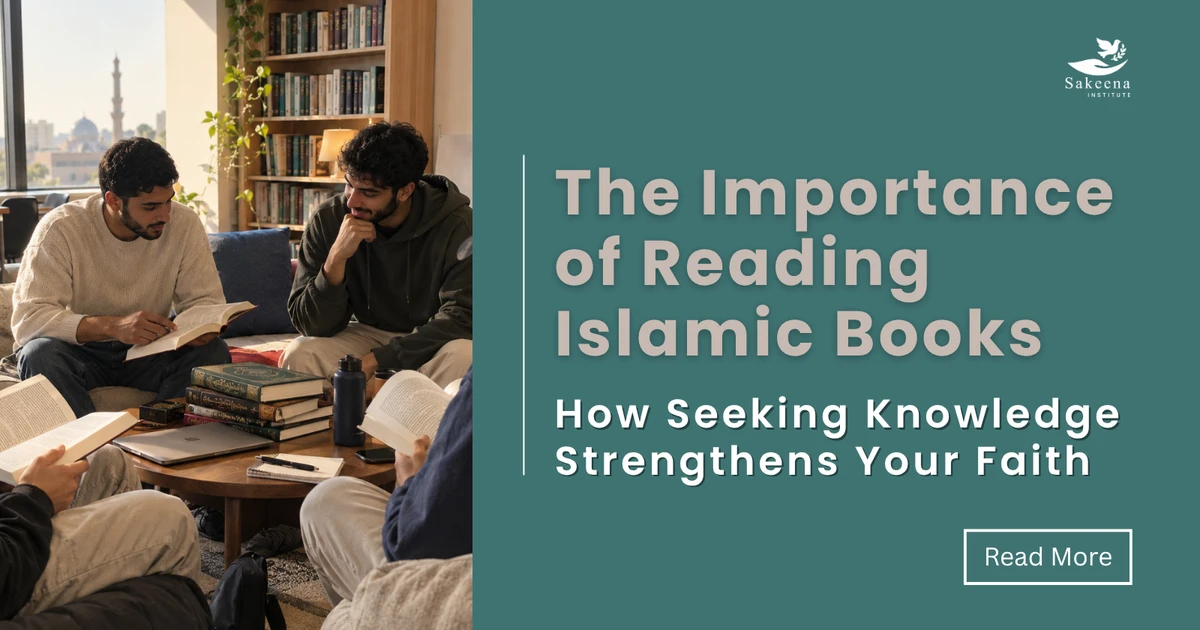

In a world where our attention is constantly pulled in different directions, making time to read can feel like a small achievement. We move from one responsibility to another, absorb countless pieces of information, and spend hours consuming content that we may forget moments later. Yet, amidst all this noise, there is a kind of reading that can transform not only what we know, but also how we understand our Creator, ourselves, and the purpose of our lives: reading Islamic books.
Seeking Islamic knowledge is not simply an academic pursuit reserved for scholars or students of religion. It is a lifelong journey that helps us worship Allah with greater understanding, recognize the wisdom behind His commands, and navigate the challenges of life with a heart grounded in faith. Through reading the Qur’an alongside authentic books of tafsir, hadith, seerah, Islamic spirituality, and the lives of the righteous, we gradually develop a deeper relationship with our religion and a more informed understanding of what it means to live as Muslims.
Reading as an Act of Worship: The Islamic Value of Knowledge
It is significant that the first revealed verses of the Qur’an began with a command related to reading:
“Read in the name of your Lord who created.” (Qur’an 96:1, Sahih International)
The opening revelation reminds us that learning is not separate from our relationship with Allah. Reading, when approached with a sincere intention, can become a means of drawing closer to Him. We read to understand His revelation, learn how to worship Him correctly, recognize what pleases Him, and become more conscious of our responsibilities toward ourselves and others.
Allah also teaches us to ask Him for an increase in knowledge:
“And say, ‘My Lord, increase me in knowledge.’” (Qur’an 20:114, Sahih International)
This beautiful supplication reminds us that knowledge is not a destination we eventually reach, but a lifelong pursuit. No matter how much we have learned, there is always more to understand, reflect upon, and apply. The believer approaches knowledge with humility, recognizing that the more they learn about Allah’s religion, the more they appreciate how much remains beyond their understanding.
The Prophet Muhammad ﷺ also emphasized the virtue of seeking knowledge. He said, “Whoever follows a path in pursuit of knowledge, Allah will make easy for him a path to Paradise.” (Sahih Muslim, 2699)
Reading a beneficial Islamic book can be one of the ways we pursue that knowledge. A few pages studied with sincerity, understood carefully, and applied consistently may become part of a much larger journey toward Allah.
How Reading Islamic Books Deepens Our Understanding of Faith
There is a difference between knowing that something is true and understanding why it matters. We may know that Allah is the Most Merciful, that patience is a virtue, and that we should place our trust in Him. Yet, when we study these concepts through the Qur’an, authentic hadith, and the explanations of reliable scholars, our understanding becomes richer and more grounded.
Reading Islamic books allows us to explore the meanings behind the beliefs and practices that shape our lives. A book on the Names of Allah, for example, can help us reflect more deeply on His mercy, wisdom, generosity, and knowledge. A reliable book of tafsir can illuminate the meanings of verses we have recited for years. Studying the seerah can help us appreciate the Prophet’s ﷺ patience, courage, mercy, and reliance upon Allah in circumstances that tested him profoundly.
This deeper understanding matters because faith is not meant to remain a collection of ideas we acknowledge without allowing them to influence our lives. Knowledge gives us opportunities to examine our assumptions, correct misunderstandings, and recognize the wisdom that can guide our decisions.
When we understand why Allah has instructed us to practice patience, for instance, we can begin to approach hardship differently. When we learn about tawakkul, we can better distinguish between taking the necessary means and becoming consumed by outcomes beyond our control. And when we study repentance, we can learn to return to Allah with hope rather than allowing guilt to convince us that change is impossible.
The more carefully we learn our religion, the more opportunities we have to transform what we know into how we live.
Reading Strengthens Our Relationship With Allah
One of the most beautiful benefits of reading Islamic books is the way beneficial knowledge can nurture our relationship with Allah. The heart is influenced by what it repeatedly encounters, and the ideas we allow into our minds can shape the way we see our circumstances, understand our purpose, and respond to our struggles.
A book about the Names of Allah may remind us that His knowledge encompasses what we cannot see. A book about the Hereafter may help us reconsider the importance we assign to temporary worldly achievements. A book on the lives of the Companions may introduce us to examples of sincerity, sacrifice, courage, and steadfastness that encourage us to examine our own character.
Through this process, reading can become an opportunity for reflection and remembrance. We may encounter a passage that helps us recognize a weakness in ourselves, a reminder that restores hope after a difficult period, or an explanation that brings clarity to a question we have carried for years.
However, the purpose of Islamic reading is not simply to collect beautiful quotations or accumulate information. Beneficial Islamic knowledge should gradually influence our intentions, worship, manners, and relationships. It should encourage us to become more truthful, more patient with others, more conscious of our shortcomings, and more hopeful in the mercy of Allah.
The true value of a book is not measured only by how much we remember after finishing it, but also by what we begin to understand and practice because we read it.
The Role of Islamic Reading in Emotional and Spiritual Well-Being
Our emotional experiences are shaped, in part, by the meanings we assign to what happens to us. When we encounter loss, uncertainty, disappointment, or prolonged difficulty, we may struggle to understand our circumstances and find a way forward.
Reading authentic Islamic literature can offer a framework through which we reflect on these experiences without denying their pain. The Qur’an, the Prophetic teachings, and the explanations of trustworthy scholars address human struggles with remarkable depth, teaching us about grief, patience, hope, gratitude, repentance, and reliance upon Allah.
Studying the lives of the Prophets, for example, reminds us that hardship is not necessarily a sign of abandonment or failure. The story of Ya‘qub عليه السلام teaches us that profound grief can coexist with patience and hope in Allah. The story of Yusuf عليه السلام illustrates how circumstances that appear devastating in one chapter of life may eventually be understood within a much wider story of Allah’s wisdom.
Books on Islamic spirituality can also help us examine the inner dimensions of our actions: the intentions behind our worship, the roots of envy or pride, the struggle against heedlessness, and the importance of sincerity. This kind of reflection can encourage greater self-awareness and help us identify areas where we need to grow.
Of course, reading is not a substitute for professional mental health support when it is needed. Rather, beneficial Islamic knowledge can complement other appropriate forms of support by offering spiritual guidance, a sense of purpose, and principles through which we make sense of life's difficulties.
The aim is not to use religious reminders to dismiss our emotions, but to learn how to respond to them in ways that are consistent with our faith.
Protecting Our Time and Attention Through Reading
We live in an age in which information is abundant, but meaningful learning often requires deliberate effort. Short videos, endless scrolling, and rapidly changing trends can occupy much of our attention without necessarily leaving us with knowledge we can recall or apply.
Reading encourages a different relationship with information. It invites us to slow down, follow an idea from beginning to end, consider its meaning, and return to a passage when we need further clarification. Instead of constantly moving to something new, we learn to remain with a subject long enough to develop a more thoughtful understanding of it.
This does not mean every form of digital content is harmful or that books are automatically beneficial. What matters is whether the material we consume serves a meaningful purpose and whether we approach it critically. Nevertheless, establishing a regular habit of reading Islamic books can help us become more intentional about how we spend our time and what we allow to shape our thinking.
Even fifteen minutes of focused reading each day can create a meaningful routine. Over time, those minutes can become hours of learning, reflection, and revision. More importantly, they can establish a regular opportunity to reconnect with knowledge that directs our attention back toward Allah and the purpose for which we were created.
How to Build a Consistent Habit of Reading Islamic Books
Beginning a reading habit does not require an extensive personal library, hours of uninterrupted time, or an advanced background in Islamic studies. What matters most is starting with suitable material and approaching it with consistency and sincerity.
1. Begin with a clear intention.
Before opening a book, remind yourself why you want to read. Perhaps you want to understand the Qur’an more deeply, improve your character, learn about the Prophet’s ﷺ life, or strengthen your understanding of tawakkul. A clear intention helps turn reading into a purposeful activity rather than another item on an endless to-do list.
2. Choose reliable and appropriate books.
Start with subjects relevant to your current needs and level of knowledge. You might explore introductory works on Islamic belief, a reliable explanation of the Qur’an, authentic collections of hadith with commentary, the seerah, or carefully selected books on tazkiyah and Islamic spirituality. Choose works grounded in the Qur’an and authentic Sunnah, and consult qualified scholars when dealing with complex or disputed matters.
3. Set a realistic daily goal.
You do not need to finish a book quickly for your reading to be worthwhile. Begin with a few pages each day or set aside ten to fifteen minutes after a regular prayer. A small habit that you can maintain is often more beneficial than an ambitious schedule that quickly becomes overwhelming.
4. Read actively and reflect.
Pause when a passage resonates with you. Write down a useful point, revisit a Qur’anic verse mentioned in the book, or ask yourself how the lesson applies to your life. Try to identify one practical action you can take from what you have learned. Reflection helps connect information with understanding and understanding with practice.
5. Apply what you learn and revisit it.
Do not feel that you must master every subject at once. Return to important passages, review your notes, and give yourself time to implement what you have understood. Beneficial knowledge deserves a place in your daily life, not merely on the pages of a finished book.
Reading Is a Lifelong Journey Toward Growth
There will be seasons when reading comes easily and others when responsibilities, tiredness, or personal difficulties make it harder to concentrate. During those times, it is important not to turn a beneficial habit into another source of unnecessary guilt. Return gently, even if you can manage only a few pages, and allow consistency to develop gradually.
We should also remember that reading Islamic books is not about appearing knowledgeable or measuring ourselves against others. Knowledge should make us more humble, not more impressed with ourselves; more compassionate, not more judgmental; and more aware of our need for Allah, not more confident in our own understanding.
The goal is not simply to become a person who has read many books. It is to become a person whose knowledge helps them worship Allah with greater sincerity, treat others with greater mercy, and navigate life with wisdom and faith.
Every book offers an opportunity to learn, but every lesson also presents a responsibility: to consider what we have learned and how it should change us. We may begin by reading about patience and gradually become more patient in our homes. We may study gratitude and become more attentive to the blessings we previously overlooked. We may learn about Allah’s mercy and become more hopeful in our repentance and more merciful toward His creation.
These changes may be gradual and often invisible to others, but they are part of the deeper purpose of seeking knowledge.
Conclusion: Make Reading a Part of Your Journey to Allah
Reading Islamic books is an investment in our understanding, our character, and our relationship with Allah. Through beneficial reading, we can strengthen our faith, deepen our understanding of the Qur’an and Sunnah, learn from the lives of the righteous, and discover guidance for the questions and challenges we encounter throughout life.
We do not need to wait until we have more time, a perfect routine, or an extensive collection of books. We can begin with one reliable book, a sincere intention, and a commitment to learn something beneficial today.
Let us make room in our lives for knowledge that nourishes the heart and illuminates the path ahead. Let us read not merely to finish pages, but to understand; not merely to gather information, but to act upon it; and not merely to become more knowledgeable, but to become better servants of Allah.
May Allah grant us beneficial knowledge, sincere intentions, and the ability to act upon what we learn. May He make our pursuit of knowledge a means of drawing closer to Him, and may the books we read become a source of guidance, wisdom, and lasting benefit in this life and the Hereafter.