
There is an ayah in the Quran that encourages every Muslim to talk about Allah and Islam:
ادْعُ إِلَىٰ سَبِيلِ رَبِّكَ بِالْحِكْمَةِ وَالْمَوْعِظَةِ الْحَسَنَةِ
Invite to the way of your Lord with wisdom and good instruction
- Surah Nahl Ayah 125
A lot of people think dawah is only for a specific group of people. That you have to have a lot of knowledge. However, anyone can speak about Allah and who He is.
And you know what they say. The closest ears listening to you when you speak…is yours.
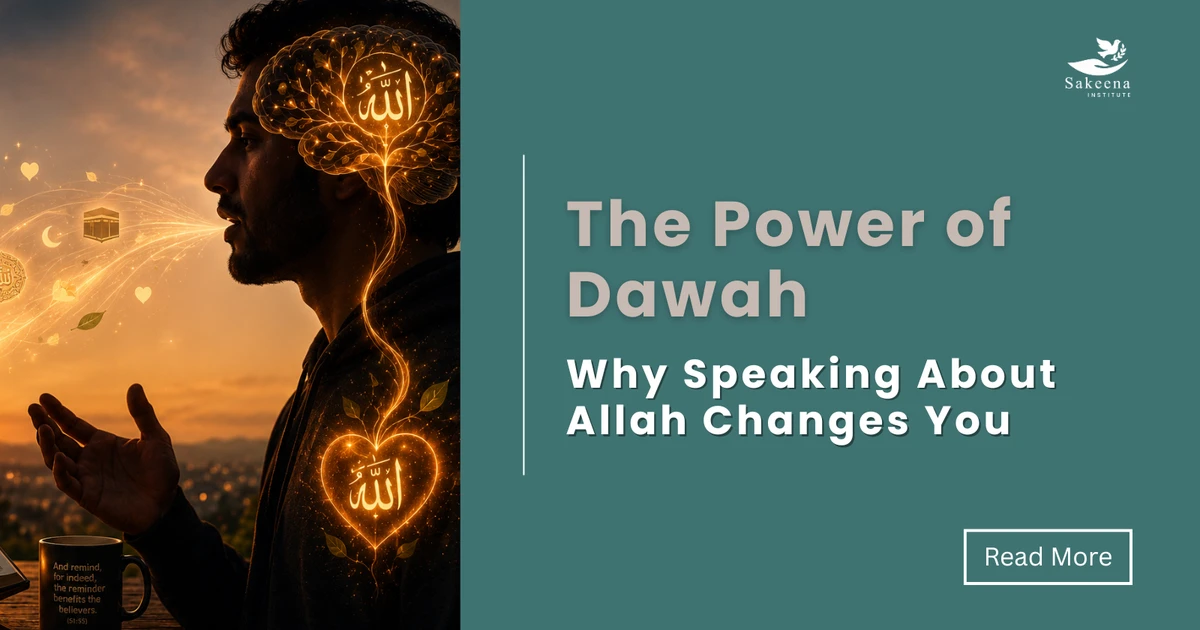
It’s also important to note that the psychological effects of dawah on the person speaking is incredible. Modern psychology has consistently found that our beliefs become stronger when we verbalize them. The things we repeatedly say begin shaping the way we think, and the way we think eventually shapes the way we behave.
Every time you remind someone that Allah is Ar-Rahman, the Most Merciful, you reinforce that belief within yourself. Every time you speak about His wisdom, His justice, or His power, those truths become more deeply rooted in your own mind.
There is also something known in psychology as the "teacher effect." People retain information far better when they expect to explain it to someone else. Preparing to teach forces the brain to organize knowledge, understand it more deeply, and remember it for longer.
This is why those who regularly speak about Islam often find themselves growing in knowledge almost without realizing it. They begin asking better questions, seeking stronger evidence, and reflecting more carefully because they know their words carry responsibility.
Speaking about Allah also changes your internal dialogue. Throughout the day, we are constantly talking to ourselves. We interpret situations, judge ourselves, anticipate the future, and make sense of life's challenges.
When your tongue becomes accustomed to reminding others that Allah is in control, that He is the Best of Planners, and that His mercy is greater than our sins, those same reminders naturally become the language of your own thoughts during moments of hardship. Instead of spiraling into fear or hopelessness, your mind already has a framework built upon tawakkul, hope, and trust in Allah.
There is another psychological benefit that is easy to overlook: your identity begins to change. The more you become someone who speaks about Allah, the more your brain starts seeing that as part of who you are. And human beings naturally try to live consistently with the identities they adopt.
If you see yourself as someone who reminds people to pray, you are less likely to neglect your own prayer. If you encourage others to have good character, you become more aware of your own actions. Your words gently hold you accountable, not out of hypocrisy, but because they continually call you back to the standard you believe in.
Perhaps this is why Allah did not only command us to remember Him privately, but also to invite others to His way with wisdom and beautiful speech. In guiding others, He is also refining us. Every sincere reminder leaves two destinations at once: it travels toward the heart of the listener, but it also settles a little deeper into the heart of the one who spoke it. Over time, those repeated reminders shape not only what we know about Allah, but who we become because of Him.
Therefore, when it comes to improving one's mental health and fully believing in Allah, it’s important to engage in work that involves a lot of dawah. To talk to others about Allah and remind them of His knowledge, power and mercy.
Of course, this does not mean standing on a stage or giving long lectures. Dawah often happens in the smallest moments. It can be a conversation with a friend who is struggling, reminding them that Allah has not abandoned them. It can be reassuring a family member that every hardship carries wisdom, or simply mentioning one of Allah's names when someone feels overwhelmed. Even sharing a verse that moved your heart or telling someone how a particular dua helped you through a difficult time is a form of dawah.
What is remarkable is that while you may think you are helping someone else, Allah is often helping you through your own words. There will be days when you remind someone to trust Allah while your own heart is filled with anxiety. Yet as the words leave your mouth, they begin speaking back to you.
You hear yourself saying, "Allah is enough for you," and suddenly you realize that you need that reminder just as much as the person in front of you. At that moment, the advice is no longer one-sided. It becomes a reminder that heals two hearts at the same time.
This is one of Allah's greatest gifts. He allows us to become a means of guidance for others while quietly guiding us in the process. Every conversation about Him becomes an act of self-reformation. Every reminder strengthens the very faith that produced it.
The one who constantly speaks about Allah cannot help but constantly think about Allah, and the one who constantly thinks about Allah gradually finds that their fears become smaller, their hope becomes stronger, and their heart becomes more at peace.
Psychologists often speak about the power of repetition in shaping the brain. The pathways we use most frequently become stronger over time. Islam has always encouraged this principle. We repeat the shahadah, we repeat the adhkar of morning and evening, we repeat Al-Fatihah in every prayer, and we are encouraged to constantly remember Allah throughout our day.
Dawah extends that same principle outward. Every time you speak about Allah's mercy, His wisdom, His forgiveness, or His promises, you are strengthening those pathways within your own mind. Eventually, these truths become your default way of seeing the world.
Perhaps this is why some of the people with the strongest certainty in Allah are those who spend their lives reminding others about Him. It is not simply because they have read more books. It is because they have spent years repeatedly speaking about His greatness until those realities became inseparable from the way they perceive life itself.
So if your heart feels distant, if your faith feels weaker than it once was, or if you find yourself constantly overwhelmed by negative thoughts, try speaking about Allah more.
Mention Him in your conversations. Share an ayah that touched you. Teach your child one of His beautiful names. Tell a friend about a lesson you learned from the Qur'an.
You may begin with the intention of benefiting someone else, only to discover that the person whose heart changed the most was your own.