
Do not limit Allah.
Four words that a sheikh once said when talking about Allah’s name “Al Qadeer,” meaning “The All-Powerful.” Do not limit Allah when it comes to your wants and wishes.
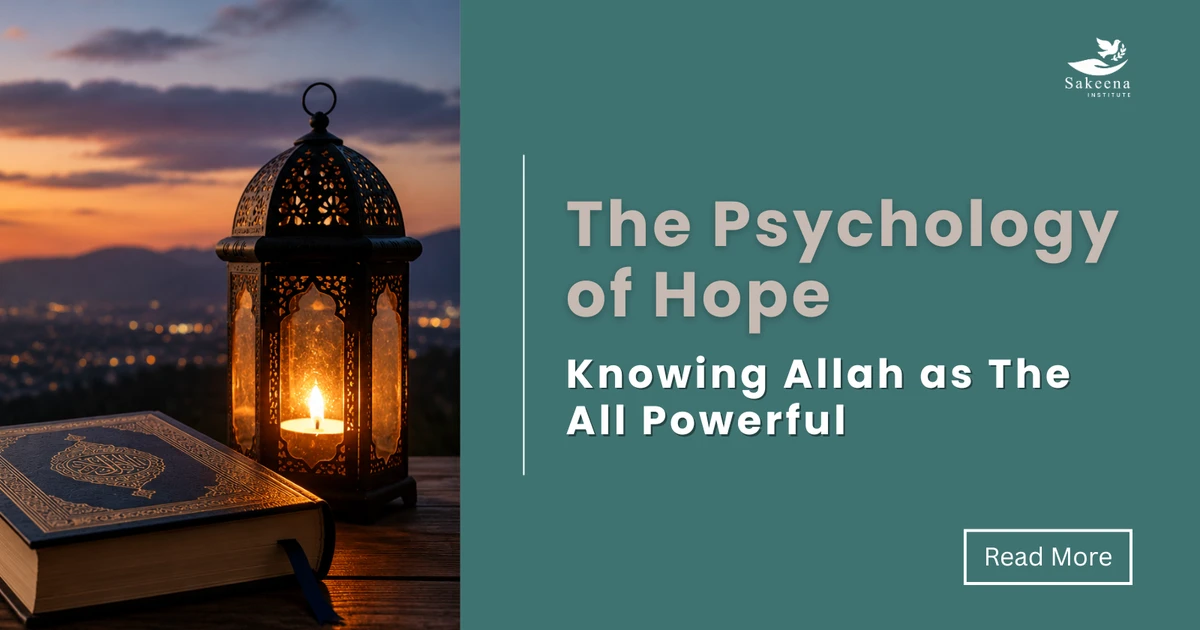
Knowing that Allah is The All-Powerful makes muslims emotionally resilient. When you know that Allah is the King of Kings, the Most Merciful, the Most wise, you start to fully believe that He can do everything and anything.
And so, you begin to make dua with deep conviction and “yaqeen,” meaning full certainty that Allah will grant you what your heart desires, be it in this world or the next.
Having this mentality makes Muslims always hopeful, always ready for anything because they know that Allah is Al Qadeer, and nothing is impossible when it comes to Allah SWT.
One of the greatest tragedies is not that our problems are too big, but that our perception of Allah has quietly become too small. No Muslim would ever claim that Allah cannot do something. We know, intellectually, that He is capable of all things.
Yet our hearts often operate differently from our minds. Without realizing it, we begin to make dua according to what seems realistic instead of according to who Allah is. We ask for what appears attainable, we lower our expectations after repeated disappointments, and we slowly begin measuring Allah's ability by the limitations of our own experiences.
Psychologists describe this as the formation of limiting beliefs. Our minds naturally look to the past to predict the future. If someone has experienced years of rejection, failure, or heartbreak, their brain begins to expect more of the same. This expectation is not necessarily a conscious choice; it becomes an automatic pattern. We start believing that because something has never happened before, it probably never will. The past quietly becomes the lens through which we view every possibility.
Islam, however, gently challenges this way of thinking. It does not deny that our experiences shape us, but it refuses to let them define us. Instead of teaching us to place our certainty in what we have seen before, it redirects our certainty toward the One who controls everything we have yet to see. This is why knowing Allah as Al-Qadeer, the All-Powerful, is not merely a theological concept.
It is something that transforms the way we think, the way we cope, and the way we interpret our lives.
When you truly know that Allah is Al-Qadeer, you stop allowing your circumstances to dictate your hope. Your mind may remember every unanswered prayer, every closed door, and every painful disappointment, but your heart remembers something greater. It remembers the Lord who created the heavens and the earth from nothing. It remembers the sea that split for Musa (AS), the fire that became coolness for Ibrahim (AS), and the barren wombs that Allah filled with life. These stories are not simply miracles from history. They are reminders that impossibility only exists from the perspective of creation. To Allah, there is no obstacle too great, no situation too complex, and no heart too broken to mend.
This shift in perspective has profound psychological effects. One of the greatest sources of anxiety is the belief that everything depends on us. We feel as though every decision must be perfect, every opportunity must be seized, and every mistake will permanently shape our future. Carrying that burden inevitably leaves the heart exhausted because human beings were never created to control every outcome.
Tawakkul frees us from that impossible responsibility. It does not mean abandoning effort or ignoring the means that Allah has placed before us. Rather, it means recognizing the boundary between what belongs to us and what belongs to Allah. Our responsibility is to strive sincerely, make thoughtful decisions, and place our trust in Him.
The results were never ours to carry. They have always belonged to Al-Qadeer.
This is why Islamic psychology builds resilience differently from many modern approaches. Psychology often defines resilience as the ability to recover after adversity. Islam certainly encourages resilience, but it cultivates it long before hardship arrives. A believer enters difficulty already convinced that Allah's wisdom has not changed, His mercy has not diminished, and His power has not been limited by the circumstances unfolding before them. That certainty does not prevent grief, fear, or sadness. Even the Prophets experienced those emotions. What it prevents is despair, because despair is not simply feeling pain. It is believing that Allah can no longer bring goodness from it.
This is why the Quran repeatedly calls us to reflect upon Allah's Names. Every name heals something different within the human soul. The one overwhelmed by guilt finds comfort in Al-Ghafoor. The one consumed by fear remembers Al-Hafeez. The one who feels abandoned calls upon Al-Wakeel. And the one who sees no way forward finds hope in Al-Qadeer. Sometimes the greatest change Allah brings into our lives is not changing our circumstances immediately, but changing the way we see Him. When our perception of Allah expands, our hope expands with it.
Even modern psychology acknowledges that hope changes human behavior. A person who genuinely believes change is possible perseveres longer, responds to setbacks more constructively, and is more likely to continue striving despite repeated failures. Islam nurtures that same hope, but it anchors it somewhere far more stable than the self. Our optimism is not rooted in our own abilities, talents, or resilience. It is rooted in Allah's infinite power and perfect wisdom. We are hopeful not because we believe we can accomplish everything on our own, but because we know the One who controls every outcome.
Perhaps that is the greatest difference between a purely psychological understanding of hope and an Islamic one. Psychology may encourage you to believe in your potential. Islam certainly values confidence and effort, but it teaches something even greater: believe in your Lord. Your strength will fluctuate. Your motivation will rise and fall. Your circumstances will constantly change. But Allah remains exactly as He has always been: Al-Qadeer, the One for whom nothing is impossible.
That is why the believer never allows their past to become a prison for their future.
They continue making dua even when they have waited for years.
They continue striving even when they have failed repeatedly.
They continue hoping even when every worldly sign suggests otherwise.
Their confidence is not built upon probability, but upon the certainty that Allah's power is not restricted by human expectations.
Once you truly know who Allah is, you stop asking yourself, "Is this possible?" and begin asking a far better question: "What is impossible for Al-Qadeer?