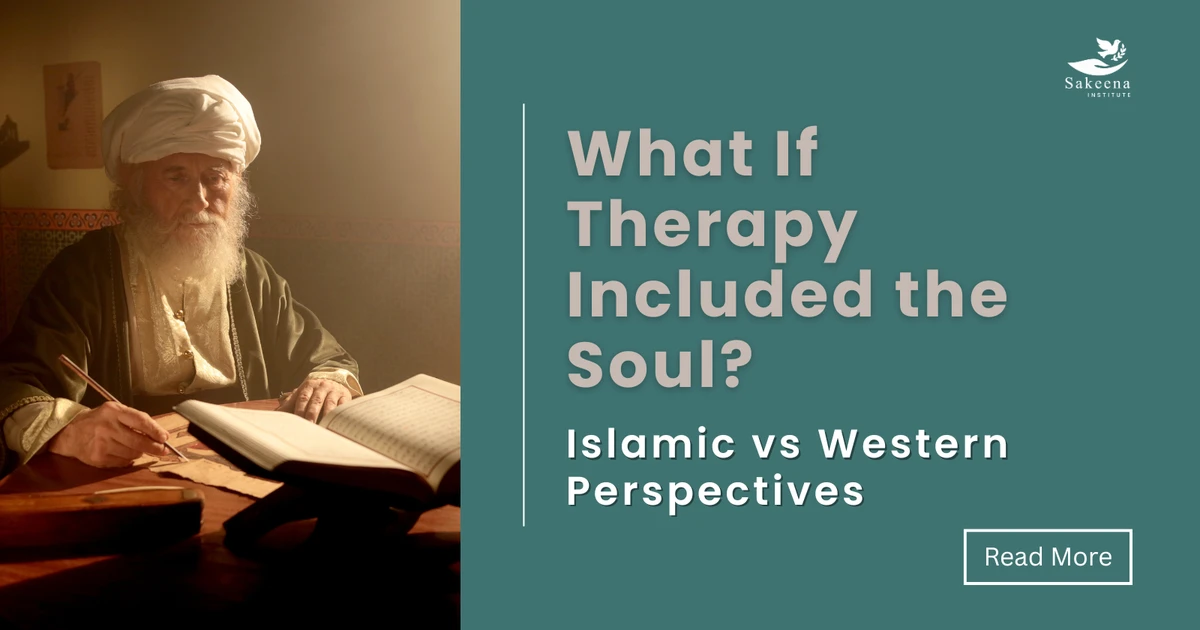

The discussion around Islamic psychology vs Western psychology is becoming increasingly important as Muslims seek mental health care that aligns with both scientific knowledge and spiritual values. While Western psychology dominates modern therapy models, Islamic psychology offers a faith-centered understanding of the human soul, behavior, and healing.
Both systems aim to improve emotional well-being, but they differ in their philosophical roots, definition of the human being, and approach to treatment. Understanding these distinctions helps individuals make informed choices about their mental health journey.
Islamic Psychology vs Western Psychology: A Foundational Comparison
At its core, the debate of Islamic psychology vs Western psychology revolves around worldview.
Western psychology has largely developed within a secular, scientific framework. It views humans primarily through the mind-body model, focusing on cognition, behavior, and neurobiology. Its foundations are rooted in empiricism, meaning knowledge comes from observation and experimentation.
Islamic psychology, on the other hand, is built upon Tawhid (the Oneness of God). It views the human being as a unified entity consisting of body, mind, and soul. Healing is not only psychological but also spiritual.
In simple terms:
- Western psychology = Focuses on the mind and behavior
- Islamic psychology = Focuses on mind, body, and soul integration
This foundational difference shapes every other aspect of therapy and treatment.
Core Theoretical Differences Between Western and Islamic Psychology
A proper comparison between the two requires looking at origins and epistemology.
Western psychology evolved through the following major schools of thought:
- Freudian psychoanalysis (unconscious drives)
- Behaviorism (observable behavior)
- Cognitive psychology (thought patterns)
- Humanistic psychology (self-actualization)
These theories rely on empirical research and scientific validation.
In contrast, Islamic tradition historically discussed psychological concepts through scholars such as Al-Ghazali and Ibn Sina. The framework includes:
- Qalb (heart): spiritual center of consciousness
- Nafs (self): the ego and desires
- Ruh (soul): divine essence breathed into humans
The key epistemological difference is this:
- Western psychology relies on human reason and research.
- Islamic psychology incorporates revelation (Qur’an and Sunnah) alongside reason.
This creates one of the major differences in Islamic therapy western psychology models.
Islamic Mental Health Approach Definitions
To understand Islamic psychology fully, we must explore core concepts under Islamic mental health approach definitions.
Fitrah
The natural disposition every human is born with which is inclined toward goodness and recognition of God.
Qalb (Heart)
Not just a physical organ, but the spiritual center responsible for moral and emotional states.
Nafs (Self)
The internal self that can incline toward ego (nafs al-ammarah) or self-discipline (nafs al-mutma’innah).
Ruh (Soul)
The divine spirit placed within humans, connecting them to their Creator.
Islamic psychology emphasizes accountability, free will, and spiritual responsibility. Mental struggles are not viewed as moral failure but as part of human testing and growth.
Faith Based Therapy vs Secular Psychology
The discussion of faith based therapy vs secular psychology highlights the role of spirituality.
Secular psychology typically avoids theological frameworks in treatment. Therapy focuses on emotional regulation, trauma processing, and cognitive restructuring without religious interpretation.
Faith-based therapy integrates belief systems directly into healing. In Islamic therapy, the following practices become coping tools alongside psychological techniques:
- Dhikr (remembrance of Allah)
- Salah (prayer)
- Dua (supplication)
- Tawakkul (trust in Allah)
They spirituality provides meaning-making. Instead of asking, “Why is this happening to me?” Islamic therapy may explore, “What is Allah teaching me through this test?”
This distinction is central in the broader Islamic psychology vs Western psychology conversation.
Islamic Therapy vs Western Psychology: Practical Differences in Treatment
When comparing Islamic therapy vs Western psychology, practical differences emerge in session structure and tools.
Cognitive Behavioral Therapy (CBT) in Western psychology focuses on identifying distorted thoughts and replacing them with rational alternatives.
Islamically integrated CBT may include:
- Challenging negative thoughts using Qur’anic verses
- Encouraging patience (Sabr) as emotional resilience
- Framing hardship within divine wisdom
Medication perspectives also vary. Western psychology may prioritize psychiatric intervention where needed. Islamic therapy does not reject medication but integrates it with spiritual care.
Other practical elements include:
- Dhikr for anxiety regulation
- Salah for structured emotional grounding
- Community support as part of treatment
These differences show that Islamic therapy aims to balance clinical science with faith.
Integrating Islam and Modern Psychology
Today, many professionals are integrating Islam with modern psychology rather than choosing one over the other.
Contemporary Muslim psychologists combine:
- Evidence-based therapies (CBT, ACT, trauma-informed care)
- Neuroscience research
- Islamic spiritual practices
This balanced model respects both empirical science and religious identity. Research increasingly shows that religious coping improves resilience and reduces depression in faith-centered populations.
A culturally sensitive therapist understands both DSM diagnostic criteria and Islamic worldview concerns.
Integration ensures therapy feels safe, authentic, and aligned with personal values.
Comparative Psychology Islam vs West: Ethical & Moral Frameworks
A deeper comparative analysis highlights ethical foundations.
Western psychology often operates within moral relativism. Ethical behavior is shaped by societal norms and individual values.
Islamic psychology is rooted in divine morality. Right and wrong are defined by revelation, not social trends.
Additional distinctions:
- Western therapy often prioritizes individual autonomy.
- Islamic psychology emphasizes community and family systems.
- Western models focus on present-life functioning.
- Islamic psychology includes accountability in the Akhirah (afterlife).
These frameworks influence how therapists guide decisions, relationships, and personal growth.
Holistic Islamic Psychotherapy Benefits
One of the strongest arguments for Islamic models is the holistic Islamic psychotherapy benefits approach.
Islamic psychotherapy addresses:
- Spiritual growth
- Emotional regulation
- Moral alignment
- Purpose-driven recovery
Rather than treating anxiety as merely a chemical imbalance, it may explore spiritual disconnection, lifestyle imbalance, and meaning crisis.
By addressing mind, body, and soul, Islamic therapy offers:
- Stronger identity formation
- Reduced spiritual guilt
- Enhanced resilience
- Deep inner peace
This holistic approach explains why interest in Islamic psychology continues to grow globally.
Choosing the Right Approach for Your Mental Health Journey
Choosing between Islamic psychology and Western psychology does not have to be an either/or decision.
Islamic therapy may benefit:
- Muslims seeking spiritually aligned care
- Individuals struggling with faith-related guilt
- Those wanting culturally sensitive counseling
Western psychology may be beneficial:
- For severe clinical disorders requiring structured protocols
- When medication management is needed
- When faith is not central to identity
For many, integration works best. The ideal therapist understands both psychological science and Islamic principles.
Seeking culturally sensitive counseling is a sign of strength, not weakness.