
Perhaps one of the biggest trials one can go through is walking down a road that looks like it's paved and built perfectly from your shortsighted view as a human.
You walk down this road and everything fits just the way you think ideally suits you.
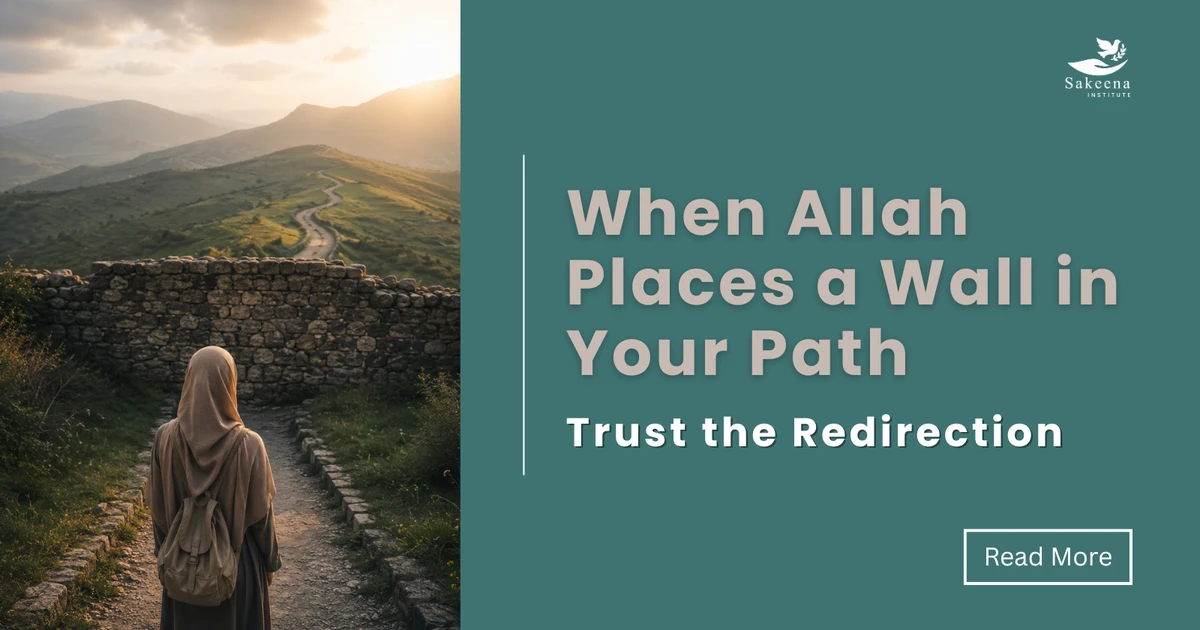
However, as you walk and admire this seemingly pristine road and you get closer and closer and closer and you’re now so close to the destination you dreamed of…a wall hits you right in front of you face.
A blockage that is so big and so unexpected and all you’re thinking is…well, it’s in these moments that it’s hard to think straight. All you feel is an influx of emotions so raw and so deep that it gets hard to breathe. It really gets hard to breathe because your legs hurt from walking for so long and your back is starting to ache and you were holding on and holding on and holding on because the destination was stupidly close…so so close.
You’ve been walking this road for months and now you can almost touch that destination…until you no longer can’t. The wall is so complete and so big and so intimidating there’s no way you can reach that end goal anymore.
And now you’re staring up at this wall and you have two options.
You can either slump against this wall and sob and think to yourself...what now?
Or you can stare up at this wall and smile.
A big, wide, brave, confident smile.
Because you know, with every cell of your being, that what was going to be right behind this wall would have been ugly. And you know this because Allah Himself put up this wall.
Allah does not put up walls unless what was behind it was going to be brutally painful. Unless He, with his mercy and care and love, wanted to protect and shelter you from something you could have never imagined.
And so what every Muslim should do is take a deep breath, take a good moment to ponder over this wall, dust off their clothes, pick up their bags, and walk right back the other way with their head held up high.
You should trace back my steps, day by day, one by one, in the other direction. Right back where you started. You, as a Muslim, need to walk back with a heart strengthened by the words of the Quran and the promises Allah gave you, with a clear and steadfast head, and a determined grin on your face.
Because you need to deeply and truly believe that on your trek back, Allah will open a new unexpected detour that you never could have expected.
And you will know for certain that this new detour was the road you were meant to walk all along.
It doesn’t matter that after months of walking on what you thought was your perfect road was met with a wall. You must walk back with battle scars from that journey and experience from that road.
So the next time a new detour opens up, you will know how to walk it, and you will know for certain that that was the road that was written for you.
You will know for certain that it wasn’t a wall.
It was a redirection towards a more beautiful stunning road that will take your breath away.
Until you see that detoured path, you must remain patient and strong.
No wall, no matter how huge and intimidating, can scare Muslims.
Allah tells us that He is always with us.
Yes, it hurts. Your legs will ache from walking towards a destination you thought was yours for what will feel like the longest time of your life. The bags you carried with you for so long are suddenly all too heavy.
But with time and perseverance, Allah will take that load off your chest.
He will make it easy for you as He has done before.
And that belief is what makes Muslims ever so mentally resilient and stronger than anyone else. Their strong belief that with hardship comes ease and after hardship comes ease.
No matter how many roads in your life have changed…the One guiding you never has.