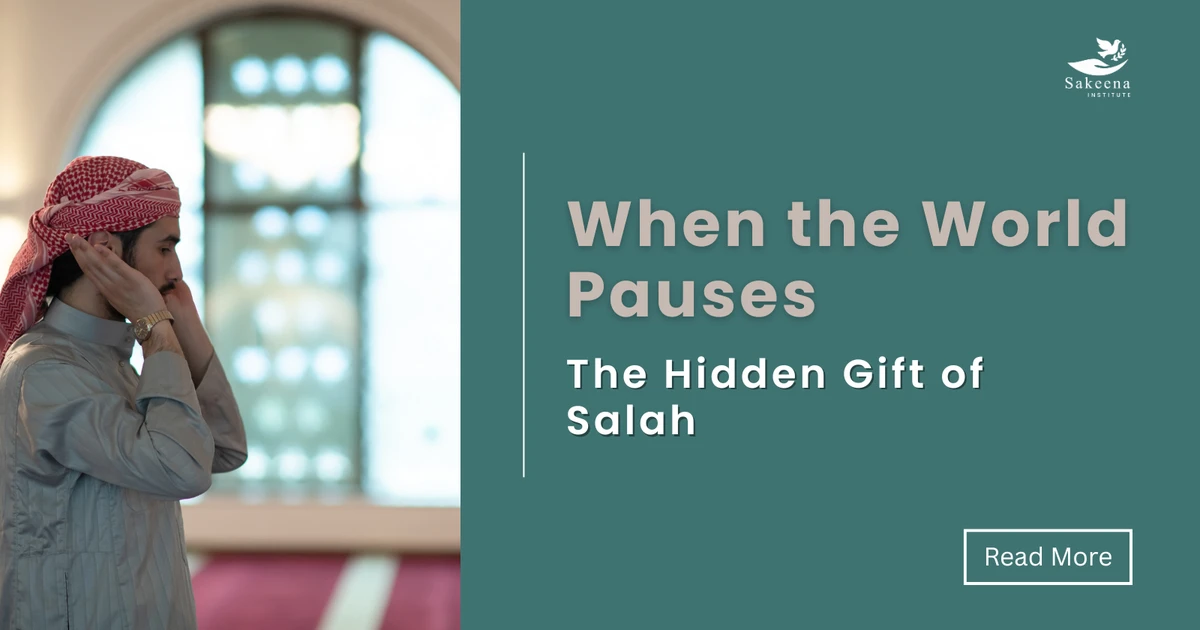

Sakeena Institute is built on a simple yet powerful idea: faith and emotional well-being are deeply connected. For many Muslims, this connection is not theoretical. It is something they feel every day through prayer. In moments of stress, uncertainty, or emotional heaviness, salah offers comfort, clarity, and a sense of inner strength.
Today, modern research is beginning to affirm what believers have long experienced. The psychology of prayer shows that salah is not only a spiritual act, but one that can profoundly influence mental health.
Within the structure of the five daily prayers, there is a natural rhythm that invites reflection, mindfulness, and grounding. These moments throughout the day help create space to pause, breathe, and reconnect. Over time, this rhythm contributes to reduced stress, greater emotional balance, and improved focus. Prayer becomes more than an obligation; it becomes a source of healing and personal growth.
In this article, we explore how the psychology of salah connects faith with mental well-being, drawing from both Islamic teachings and insights from modern psychology.
Psychology of Prayer Salah: Understanding the Mental Benefits of Salah
The psychology of prayer salah looks at how Islamic prayer shapes emotional regulation, mental clarity, and spiritual well-being. By being performed five times a day, salah introduces a consistent structure that encourages believers to pause regularly and reconnect with Allah.
This daily routine offers several important benefits. It creates regular opportunities for reflection, helping individuals step away from the constant flow of daily pressures. It reduces stress by shifting attention away from worries and toward something greater. It strengthens a person’s sense of identity and purpose, while also encouraging mindfulness and emotional balance.
From a psychological perspective, structured spiritual practices like prayer play a powerful role in building emotional resilience. Research on meditation and prayer consistently shows that such practices can reduce anxiety, improve concentration, and support overall mental well-being.
Prayer also nurtures a sense of trust and surrender. In turning to Allah, believers learn to release their worries and accept life’s challenges with greater patience and calm.
Why Spiritual Practices Support Mental Health
Across cultures and traditions, spiritual practices have long been associated with emotional healing. Modern psychology now confirms that faith-based practices can support mental stability and resilience in meaningful ways.
These practices are often linked to reduced anxiety through a sense of reassurance, a stronger sense of purpose and meaning in life, greater emotional stability through reflection, and improved mental clarity through mindfulness.
In Islam, prayer holds a central role in nurturing both spiritual and emotional well-being. The concept of Islamic prayer and mental health highlights how acts of worship contribute not only to spiritual growth, but also to emotional strength.
The Psychological Benefits of Prayer in Islam
The psychological benefits of prayer in Islam are rooted in both spiritual wisdom and well-established psychological principles. Salah encourages believers to slow down, turn inward, and reconnect with their purpose.
One of the most noticeable benefits is emotional discipline. Through consistent prayer, individuals learn to manage stress and maintain composure, even in difficult situations. Prayers also build self-awareness by creating space for reflection on thoughts, intentions, and actions.
Each prayer serves as a mental and emotional reset. These pauses throughout the day help prevent overwhelm, allowing individuals to regain clarity and calm.
Over time, this consistency strengthens resilience and improves overall mood. By reinforcing spiritual identity and offering moments of stillness, salah supports both emotional and mental well-being.
How Salah Affects the Brain
Studies suggest that regular prayer can help lower cortisol levels, the hormone associated with stress. Reduced cortisol contributes to a calmer mental state and less anxiety.
Prayer also supports emotional regulation by activating areas of the brain linked to empathy and self-control. This can lead to increased patience and emotional balance.
The repetitive movements and recitations within salah help calm the nervous system, improving focus and concentration. At the same time, spiritual reflection can activate feelings of gratitude and compassion, enhancing positive emotional experiences.
These findings help explain why prayer has such a strong impact on mental health. It provides a natural and consistent pathway toward emotional balance and psychological resilience.
Spiritual Psychology of Salah and Inner Peace
Beyond the scientific perspective, the spiritual psychology of salah highlights how prayer nurtures inner peace by strengthening the relationship between the believer and Allah.
There is a deep sense of humility in prayer. Standing before Allah reminds individuals of their dependence on Him, helping to reduce ego-driven stress and pressure.
Reciting the Quran encourages reflection on blessings and divine mercy, naturally cultivating gratitude. In psychology, gratitude is known to be one of the strongest contributors to emotional well-being.
Prayer also creates a space to let go. In turning to Allah, believers are able to release their worries and place their trust in His wisdom. This act of surrender can significantly ease anxiety and emotional tension.
Together, these elements create a powerful sense of calm, reassurance, and stability.
Mindfulness in Salah: Islamic Meditation Through Prayer
Many aspects of salah closely resemble what modern psychology describes as mindfulness. In fact, prayer naturally incorporates mindfulness, making it both a spiritual and psychological practice.
During recitation, believers focus on the meaning of the words, strengthening awareness and presence. The physical movements of prayer (standing, bowing, and prostrating) encourage controlled breathing and help calm the body.
Prayer also invites intentional reflection, allowing individuals to reconnect with their purpose and values.
Because of these elements, salah is often described as a form of meditation in Islam, one where mindfulness and spiritual devotion come together. This form of Islamic mindfulness helps center the mind and bring a sense of calm clarity.
Emotional Benefits of Salah and Stress Relief
One of the most immediate effects of prayer is emotional relief. In the midst of stress or difficulty, salah offers a moment to step back and reset.
These structured pauses provide grounding, reminding individuals that challenges are temporary. Prayer helps create emotional stability by offering reassurance and perspective.
Over time, consistent prayer strengthens patience, or sabr, allowing individuals to approach life’s difficulties with greater resilience and strength.
The five daily prayers act as regular emotional checkpoints, helping individuals process their feelings and maintain balance throughout the day.
Why Prayer Improves Mental Health
There are several reasons why prayer has such a positive impact on mental health, particularly within the Islamic framework.
First, it strengthens the connection with Allah, creating a sense of comfort, protection, and spiritual support. Second, it provides structure. The regular timing of prayers introduces stability and rhythm, which are essential for emotional well-being.
Prayer also encourages self-reflection, helping individuals become more aware of their actions and intentions. In addition, congregational prayer fosters a sense of community and belonging, reducing feelings of isolation.
Institutions like Sakeena Institute emphasize the importance of bringing together spiritual guidance and mental health awareness. By combining these approaches, individuals can experience a more balanced and holistic sense of well-being.
Final Thoughts
The psychology of prayer salah reveals something deeply meaningful: spirituality and mental health are not separate. They are interconnected in powerful ways. Through reflection, mindfulness, and devotion, salah supports emotional balance, resilience, and inner peace.
When approached with sincerity and presence, prayer becomes more than routine. It becomes a source of strength, a space for healing, and a path toward deeper self-awareness and connection with Allah.
For those seeking greater emotional and spiritual well-being, the answer may lie in returning to the quiet consistency of prayer.