
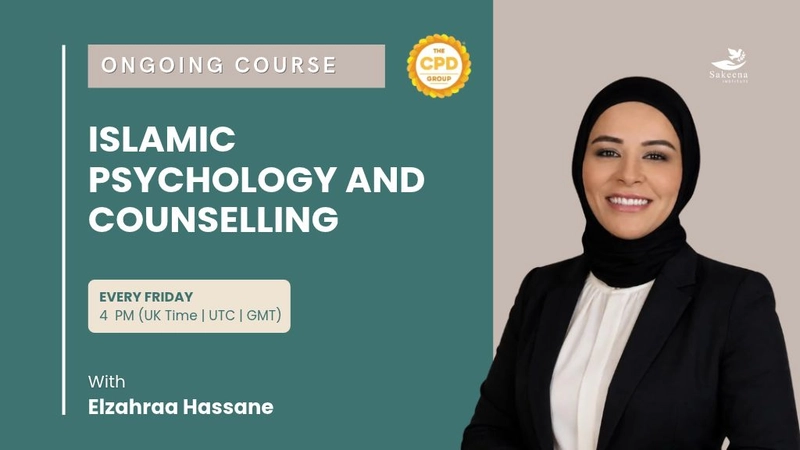
Your instructor
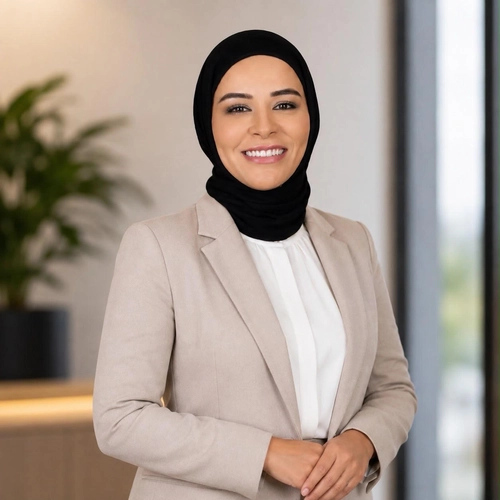 Your instructorElzahraa HassaneFaith-based Mental Wellbeing Educator
Elzahraa Hassane is the Founder and Executive Director of "Sakeena Institute", an international educational platform dedicated to integrating authentic Islamic knowledge with contemporary psychology, neuroscience, and education to promote emotional well-being, resilience, and personal growth. She is a Doctoral Researcher in Education, with research focusing on the integration of faith-based education, emotional resilience, and psychological well-being. She has also completed the taught component of the MSc in Neuroscience and Psychology of Mental Health at the University of Warwick. She holds a Master of Education (M.Ed.), the University of Exeter (UK), a "Master's degree in Islamic Studies" from Middlesex University, UK., and a "Master's degree in Applied Linguistics, a linguistic comparison between English and Arabic", University of Tanta, Egypt. As a Certified Mental Health Consultant, Elzahraa combines academic research with practical application, bridging Islamic psychology, neuroscience, education, and emotional healing to develop evidence-informed programmes that help individuals strengthen their faith, build emotional resilience, and improve psychological well-being. Through Sakeena Institute, she has designed and delivered educational programmes for a global audience, making complex concepts in psychology, neuroscience, and Islamic scholarship accessible, practical, and transformative. Alongside her academic work, she is an international educator, speaker, author, and content creator whose educational content has reached more than 500,000 people across digital platforms. Her mission is to reconnect individuals with faith as the foundation for emotional healing, personal growth, and lasting inner peace.
View profileThis course includes
- Duration
- 10 hours (5 weeks)
- Lessons
- 13 in 5 modules
- Start date
- Oct 2, 2026
- Category
- Islamic Psychology
- Discussion forum
- Opens after you enrollJoin the discussion
Islamic Psychology and Counselling
Islamic Psychology
Course Outline
13 lessons • 5 weeks
The Islamic model of the self (fitrah, ruh, nafs, qalb, aql)
Module 1 • 3 lessons • 2 hr 51 min
The Islamic model of the self (fitrah, ruh, nafs, qalb, aql)
Module 1 • 3 lessons • 2 hr 51 min
Recognising anxiety, low mood, stress and obsessive worry
Module 2 • 3 lessons • 3 hr
Recognising anxiety, low mood, stress and obsessive worry
Module 2 • 3 lessons • 3 hr
Listening and counselling skills, and supporting autism, ADHD and learning differences
Module 3 • 3 lessons • 2 hr 1 min
Listening and counselling skills, and supporting autism, ADHD and learning differences
Module 3 • 3 lessons • 2 hr 1 min
Cognitive Behavioural Therapy (CBT): Psychological Tools and Their Connections to Islamic Faith
Module 4 • 3 lessons • 2 hr
Cognitive Behavioural Therapy (CBT): Psychological Tools and Their Connections to Islamic Faith
Module 4 • 3 lessons • 2 hr
Psychological first aid for grief and crisis, ethics, boundaries and when to refer
Module 5 • 1 lessons • 2 hr
Psychological first aid for grief and crisis, ethics, boundaries and when to refer
Module 5 • 1 lessons • 2 hr
About this course
Islamic Psychology and Counselling- Foundation Course
Islamic Psychology and Counselling is an online Islamic psychology course built for beginners. In five live Friday evenings you will learn how Islam understands the self, how to recognise anxiety, low mood and stress, how to listen so that people open up, how to change unhelpful thinking and behaviour, and how to respond calmly when someone is in crisis.
If people already come to you with their problems, this course teaches you what to do next.
Why this course
- The only beginner-level Islamic counselling course that combines the Islamic model of the self with clinical tools such as CBT, formulation and psychological first aid
- Skills you can use the same evening, at home, at work and in your community
- Small live sessions with practice exercises, so you learn by doing rather than only listening
- A direct route into the Certified Islamic Psychology Coach and Islamic Trauma Healing Coaching certifications
Who this course is for
- Coaches, mentors and anyone people naturally turn to for support
- Teachers, religious teachers and youth workers who want to understand the students in front of them
- Community leaders and volunteers who are asked for personal and family advice
- Parents and carers who want to understand behaviour, development and mental health at home
- Students of psychology, Islamic studies and related fields looking for an integrated foundation
- Anyone considering the Certified Islamic Psychology Coach or Islamic Trauma Healing Coaching pathways
Format and duration
- Ten live sessions delivered as five two-hour Friday evenings, 5:00 to 7:00 PM UK time
- Each evening contains two one-hour sessions with a five-minute break
- Every session combines short teaching blocks, a practical exercise and time for your questions
- All sessions are recorded, so you never miss anything
- A concise reading pack and a worksheet are released before each session
- A short reflection after each session and one final case study
- Total learning time: 10 contact hours plus approximately 8 hours of guided reading and assignments
What you will learn, week by week
- Week 1: The Islamic model of the self (fitrah, ruh, nafs, qalb, aql) and how people develop
- Week 2: Recognising anxiety, low mood, stress and obsessive worry, and why behaviour happens
- Week 3: Listening and counselling skills, and supporting autism, ADHD and learning differences
- Week 4: Understanding any person's difficulty, and CBT tools reframed through Islamic practice
- Week 5: Psychological first aid for grief and crisis, ethics, boundaries and when to refer
What you will walk away with
- A clear map of the self as Islam describes it, and how it connects to modern psychology
- The confidence to recognise anxiety, low mood, stress and obsessive worry, and to know what to say
- Listening and counselling skills you can use immediately
- A simple, structured way to understand any person's difficulty, including the role of faith
- Practical CBT tools reframed through Islamic practice
- A working knowledge of how people develop, why behaviour happens and how to change it
- The ability to recognise autism, ADHD and learning differences and support families with dignity
- Psychological first aid skills for grief, shock and crisis
- Clear ethical boundaries so that you help safely and know when to refer
Course learning outcomes
By the end of the course, you will be able to:
- Describe the Islamic model of the self (fitrah, ruh, nafs, qalb, aql) and relate it to modern psychological concepts
- Recognise common mental health presentations and distinguish between spiritual, psychological and combined explanations without dismissing either
- Demonstrate core listening and counselling skills in a structured helping conversation
- Take a basic case history and produce a simple five P formulation that includes faith and community as protective factors
- Explain the cognitive model and apply a thought record alongside the Islamic practice of muhasabah
- Outline the stages of human development through an Islamic and psychological lens
- Analyse a behaviour using the ABC model and design a simple positive behaviour plan
- Recognise signs of autism, ADHD and learning differences, and support families with compassion and accurate information
- Deliver psychological first aid and respond appropriately to grief and crisis, including knowing when to escalate
- Apply ethical principles of confidentiality, boundaries, scope of practice and referral in your own helping role
Assessment and certification
- To receive a Certificate of Completion, learners must attend at least four of the five live sessions (a missed session can be made up by watching the recording and completing its worksheet), submit all five session reflections, and pass the final case study assignment (800 to 1,000 words).
- Scope of practice This is an introductory course. It does not qualify learners to practise as counsellors, psychotherapists or psychologists, or to diagnose or treat mental health conditions. It equips learners to support people within their existing roles, to recognise when someone needs professional help, and to refer them appropriately.
Reviews
Earn a certificate when you finish
Complete the course to receive a certificate you can share with employers, add to your CV or keep for yourself.
Membership students can unlock their certificate for 80% of the course price.Learn more
Complete all 13 lessons
Apply for a scholarship
If the course fee is a barrier, you can apply for a scholarship for Islamic Psychology and Counselling. Tell us a little about your situation and our team will review your application.
Apply for a scholarshipRelated courses
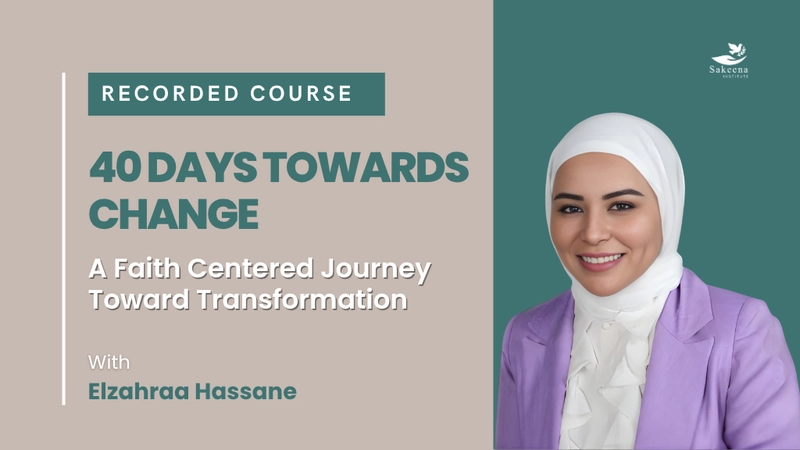
40 Days Towards Change
by Elzahraa Hassane
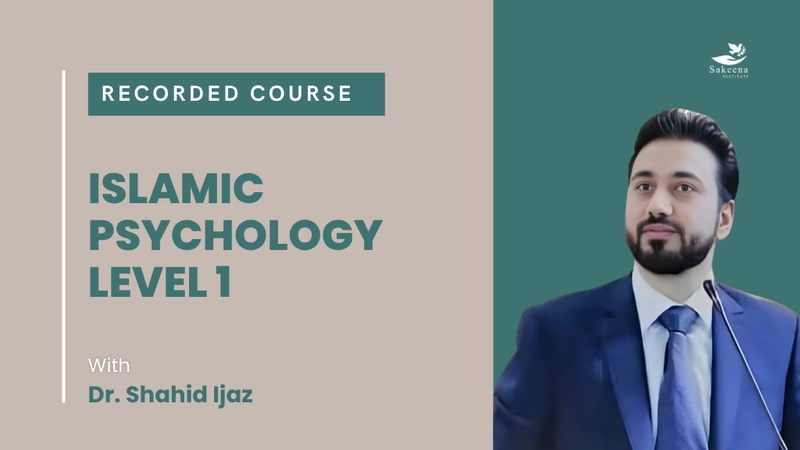
Islamic Psychology Level 1 with Dr. Shahid Ijaz
by Dr. Shahid Ijaz
Understanding the Delays in Your Life (Healing the Hidden Blocks Through Faith & Tawakkul)
by Elzahraa Hassane
How to Become a Faith-Based Speaker & Coach
by Elzahraa Hassane