
Back to Courses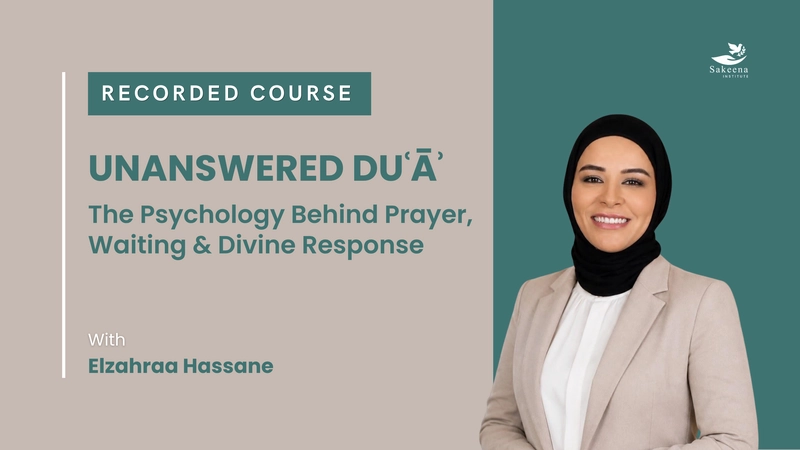
Unlock Your
Apply nowJoin Community Chat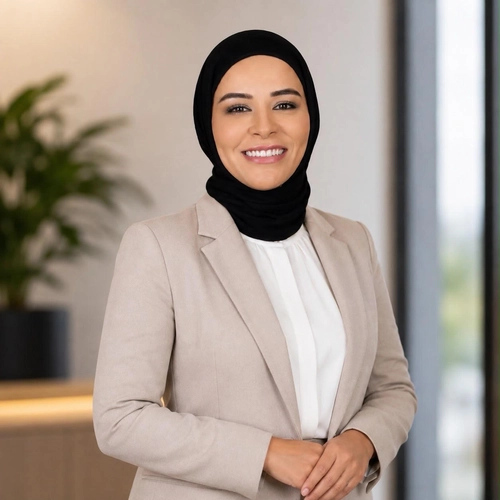
UNANSWERED DUʿĀʾ
The Psychology Behind Prayer, Waiting & Divine Response
Included in your membership
Course Curriculum
6 lessons • 2 weeks
Module 1
3 lessons • 120 min
Module 1
3 lessons • 120 min
Understanding Duʿāʾ, Divine Delay & the Psychology of Waiting -Recording
2 hr
PDF
Understanding Duʿāʾ, Divine Delay & the Psychology of Waiting - PPT
PDF
Understanding Duʿāʾ, Divine Delay & the Psychology of Waiting - Reading Materials
Module 2
3 lessons • 120 min
Module 2
3 lessons • 120 min
How to Strengthen Your Duʿāʾ, Remove Obstacles & Seek Divine Response -Recording
2 hr
PDF
How to Strengthen Your Duʿāʾ, Remove Obstacles & Seek Divine Response- PPT
PDF
How to Strengthen Your Duʿāʾ, Remove Obstacles & Seek Divine Response- Weeklt Rountine
Week One: Why Does My Duʿāʾ Seem Unanswered?
Understanding Duʿāʾ, Divine Delay and the Psychology of Waiting
What does it actually mean to make duʿāʾ, and what does Allah mean when He promises to respond?
Week One explores the foundations of duʿāʾ and challenges one of our biggest assumptions: that an answered duʿāʾ must mean receiving exactly what we asked for, at the time we asked for it.
We will explore the Qurʾanic understanding of duʿāʾ, what istijābah (divine response) really means, and the different ways in which Allah may respond to His servant. We will examine why some answers come quickly while others appear to be delayed, redirected or withheld, and why delay should never automatically be interpreted as rejection.
The session will also explore the psychology of waiting. What happens to the heart and mind when we have been asking for something for months or years? Why can hope gradually turn into frustration, anxiety, comparison, overthinking or despair? And what happens when our emotional wellbeing becomes dependent upon one particular outcome?
We will examine the difference between trusting Allah and trusting that Allah will give us exactly what we want. Through examples from the Qurʾan and authentic Sunnah, including the experiences of Zakariyyā, Yaʿqūb, Ayyūb and other Prophets عليهم السلام, students will discover how prolonged waiting can coexist with profound certainty in Allah.
By the end of Week One, students should begin moving from the thought "Allah has not answered me" to the deeper question: "What does Allah's response actually look like?"
Week Two: The Path to an Answered Duʿāʾ
Strengthening Your Duʿāʾ, Removing Obstacles and Seeking Divine Response
Two-Hour Live Session
If Allah has commanded us to call upon Him, how should we ask?
Week Two moves from understanding duʿāʾ to actively transforming the way we make it.
Drawing upon the Qurʾan and authentic Prophetic guidance, we will explore the qualities and practices associated with powerful duʿāʾ and divine response. Students will learn about sincerity, presence of heart, certainty in Allah, humility, persistence, repentance, seeking forgiveness, lawful provision, praising Allah, sending blessings upon the Prophet ﷺ, and the times and circumstances in which duʿāʾ is especially encouraged.
We will also examine the obstacles to duʿāʾ. Why did the Prophet ﷺ warn against becoming impatient and saying, "I made duʿāʾ but I was not answered"? How can unlawful earnings affect duʿāʾ? How can sin, heedlessness, despair, entitlement or an unhealthy attachment to one outcome affect the spiritual state from which we are asking?
The session will explore an important distinction between persistence and attachment. You can continue asking Allah intensely while surrendering the final outcome to Him. Tawakkul does not mean that you stop wanting, asking or taking action. It means that you take the means, make the duʿāʾ and continue trying, while your heart remains dependent upon Allah rather than upon the means or the outcome.
Students will also learn practical ways to build a stronger personal duʿāʾ routine: how to prepare the heart before asking, how to structure duʿāʾ using Prophetic guidance, how to identify appropriate times for duʿāʾ, how to combine duʿāʾ with action, and how to continue asking without becoming psychologically consumed by waiting.
The course concludes by addressing perhaps the deepest level of tawakkul: can I ask Allah wholeheartedly for what I want while still trusting Him if His answer looks completely different from mine?
By the end of Week Two, students will understand why duʿāʾ may appear unanswered, how to strengthen their duʿāʾ, how to seek the means associated with divine response, how to navigate the waiting, how to recognise the different forms of Allah's response, and how to continue asking Him with hope, certainty and peace.
What You Will Receive
A downloadable Duʿāʾ Workbook and Practical Guide, designed to help you reflect on your personal duʿāʾs, strengthen the way you ask Allah, identify possible obstacles, and build a meaningful duʿāʾ routine based on the Qurʾan and authentic Sunnah.
The Journey
Week One: Why does my duʿāʾ seem unanswered?
Week Two: How can I strengthen my duʿāʾ and seek Allah's response?
This course takes you from confusion about unanswered duʿāʾ to a clear understanding of how Allah responds, and from anxious waiting to asking Him with hope, certainty and peace.
Student Reviews
N/A(0 reviews)
No reviews yet. Be the first to write one.
Unlock Your
Professional Certificate
Complete all course modules to earn your verified certificate and showcase your achievement.
Sign in to apply for this scholarship
Create a free account or log in to submit your application for UNANSWERED DUʿĀʾ.
Recorded
UNANSWERED DUʿĀʾ
$55.00One-time payment
Included in your membership
You have access to this course
Go to courseCommunity Chat
Active nowA space to ask questions, share reflections, and connect with others going through the same course alongside your instructor.
Community Chat
Course Details
- Level
- beginner
- Duration
- 4.00 hours (2 weeks)
- Hours per Session
- 2.00 hrs
- Lessons
- 6
- Modules
- 2
- Start Date
- Aug 22, 2026
- Category
- Islamic Psychology
- Status
- Recorded
Instructor
Elzahraa Hassane is the Founder and Executive Director of "Sakeena Institute", an international educational platform dedicated to integrating authentic Islamic knowledge with contemporary psychology, neuroscience, and education to promote emotional well-being, resilience, and personal growth. She is a Doctoral Researcher in Education, with research focusing on the integration of faith-based education, emotional resilience, and psychological well-being. She has also completed the taught component of the MSc in Neuroscience and Psychology of Mental Health at the University of Warwick. She holds a Master of Education (M.Ed.), the University of Exeter (UK), a "Master's degree in Islamic Studies" from Middlesex University, UK., and a "Master's degree in Applied Linguistics, a linguistic comparison between English and Arabic", University of Tanta, Egypt. As a Certified Mental Health Consultant, Elzahraa combines academic research with practical application, bridging Islamic psychology, neuroscience, education, and emotional healing to develop evidence-informed programmes that help individuals strengthen their faith, build emotional resilience, and improve psychological well-being. Through Sakeena Institute, she has designed and delivered educational programmes for a global audience, making complex concepts in psychology, neuroscience, and Islamic scholarship accessible, practical, and transformative. Alongside her academic work, she is an international educator, speaker, author, and content creator whose educational content has reached more than 500,000 people across digital platforms. Her mission is to reconnect individuals with faith as the foundation for emotional healing, personal growth, and lasting inner peace.
Related Courses
islamic psychology
Mental Health & Wellbeing from a Psychological and Islamic Perspective
by Diveena Nair
$40.00recorded