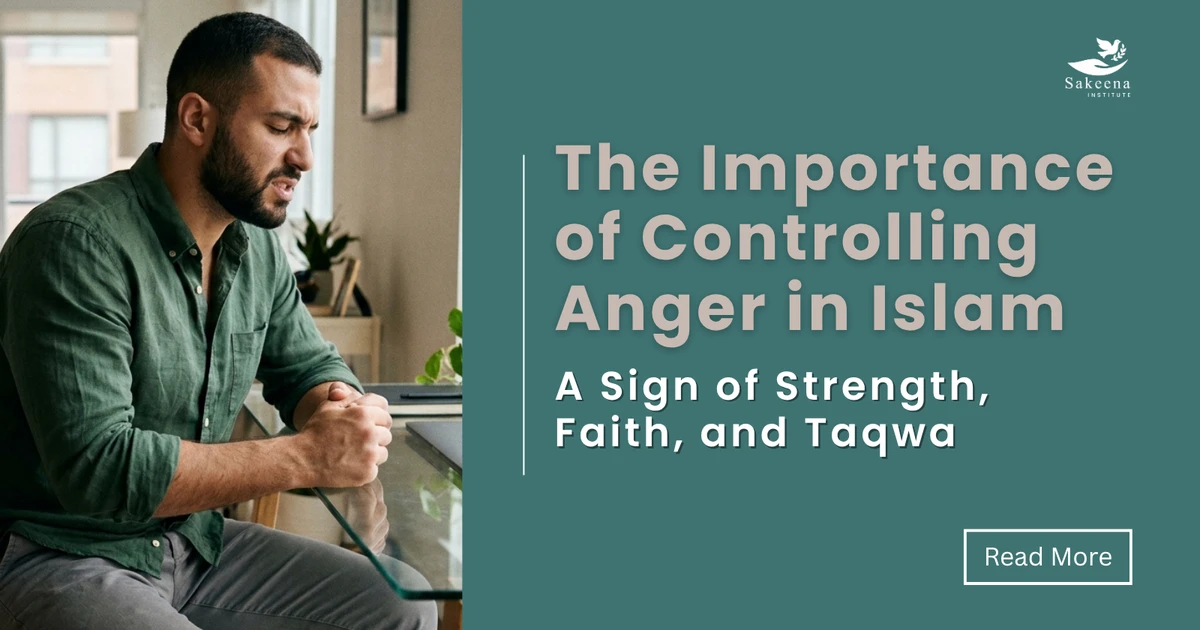

Anger is one of the emotions Allah has placed within the human soul. It is a natural response to situations that hurt us, frustrate us, or challenge our sense of justice. Yet, like every emotion, anger can become destructive when it is allowed to take control of our words, decisions, and actions. A moment of anger can damage a relationship that took years to build, leave wounds that a thousand apologies cannot fully heal, and cause a person to say things they would never have said had they paused for a moment. This is why controlling anger in Islam is not simply a matter of good manners or emotional intelligence; it is an essential part of cultivating a sound heart and developing a character that is pleasing to Allah.
Islam does not expect a believer to become someone who never experiences anger. Rather, it teaches us how to respond to it, how to restrain ourselves when our emotions become overwhelming, and how to choose what pleases Allah over what temporarily satisfies our ego. The real test is not whether we feel anger, but what we allow that anger to make us become.
The Strongest Person Is the One Who Controls Himself
One of the most profound teachings of the Prophet Muhammad ﷺ concerning anger is his redefinition of what it means to be strong. We often associate strength with the ability to defend ourselves, overpower others, or make our displeasure known. However, the Prophet ﷺ redirected our understanding towards something far greater.
He ﷺ said:
«لَيْسَ الشَّدِيدُ بِالصُّرَعَةِ، إِنَّمَا الشَّدِيدُ الَّذِي يَمْلِكُ نَفْسَهُ عِنْدَ الْغَضَبِ»
"The strong man is not the one who is good at wrestling, but the strong man is the one who controls himself when he is angry."
(Sahih al-Bukhari 6114; Sahih Muslim 2609)
There is something deeply humbling about this definition. A person may be capable of overpowering everyone around them, yet remain unable to control a single moment of anger. They may have the last word in every disagreement, but lose the ability to restrain their tongue when they feel offended. Islam teaches us that this is not strength.
True strength is the ability to remain conscious of Allah when our emotions are urging us to forget Him. It is to have the power to hurt someone with our words but choose silence, to have an opportunity to retaliate but choose forgiveness, and to feel provoked without allowing ourselves to become unjust.
It is a strength that may go unnoticed by people, but is never unseen by Allah.
Allah Praises Those Who Restrain Their Anger
Among the beautiful qualities Allah mentions when describing the people of taqwa is their ability to restrain anger and forgive others. Allah says:
﴿وَالْكَاظِمِينَ الْغَيْظَ وَالْعَافِينَ عَنِ النَّاسِ وَاللَّهُ يُحِبُّ الْمُحْسِنِينَ﴾
"And those who restrain anger and who pardon the people, and Allah loves the doers of good."
(Surah Aal-Imran, 3:134)
Notice how Allah places restraining anger alongside pardoning others, then concludes the verse by mentioning His love for those who do good. These are not insignificant qualities in the sight of Allah. They are among the characteristics of the people of taqwa.
The expression al-kazimeen al-ghaydh is particularly beautiful. It describes those who hold back their anger, containing it rather than allowing it to spill out through harmful words and actions. It does not necessarily mean that they do not feel the intensity of what has happened. They may be deeply hurt, frustrated, or disappointed, yet they refuse to let those feelings dictate their behavior.
And then Allah mentions something even greater: al-'afeen 'an al-naas, those who pardon people.
This reminds us that controlling anger is not always the final step. Sometimes, after restraining ourselves, we are also called to release the resentment we continue carrying in our hearts. We may have refrained from saying something hurtful, but do we continue replaying the incident? Do we hold onto every mistake, waiting for the next disagreement to bring it up again? Do we allow resentment to occupy a space in our hearts that could otherwise be filled with remembrance of Allah?
Forgiveness is not always easy, and it does not mean accepting injustice or abandoning legitimate boundaries. However, when we are able to forgive for the sake of Allah, we free our hearts from becoming prisoners of what others have done to us.
The Prophet ﷺ Was Never Driven by Personal Anger
Perhaps one of the most beautiful examples of controlling anger can be found in the character of the Prophet Muhammad ﷺ.
Aishah رضي الله عنها described his character, saying:
«وَمَا انْتَقَمَ رَسُولُ اللَّهِ ﷺ لِنَفْسِهِ فِي شَيْءٍ قَطُّ»
"The Messenger of Allah ﷺ never took revenge for himself in anything."
(Sahih al-Bukhari 3560; Sahih Muslim 2327)
The Prophet ﷺ experienced hardship, rejection, insults, and mistreatment beyond what most of us could imagine. He was mocked, harmed, and driven from his beloved city. Yet his personal grievances never became an excuse for cruelty or uncontrolled anger.
This does not mean that he never experienced anger. Aishah رضي الله عنها also narrated that the Prophet ﷺ would become angry when the limits set by Allah were violated. His anger was not driven by wounded pride, personal vanity, or the desire to establish superiority over others. It was guided by what was right and what was pleasing to Allah.
There is an important distinction here. Islam does not teach us to become indifferent to wrongdoing or to abandon justice. Rather, it teaches us to distinguish between defending what is right and defending our egos. Sometimes, what we call righteous anger is simply our inability to accept being contradicted, corrected, or inconvenienced.
The Prophet ﷺ teaches us that a believer's character should not fluctuate according to how others treat them. We should not become harsh simply because someone else was harsh, nor should we abandon our principles because someone has provoked us.
Beware of What Anger Can Make You Say
One of the greatest dangers of anger is that it can temporarily weaken our awareness of consequences. A person may speak without thinking, expose private matters, insult someone they love, or make accusations they would never make in a calmer state.
And while the anger may disappear within minutes, the words spoken during it may remain in someone's memory for years.
How many relationships have been damaged by arguments that were never really about the subject being discussed? How many homes have lost their tranquility because every disagreement became an opportunity to raise one's voice, revisit old mistakes, or say something deliberately hurtful?
The Prophet ﷺ gave us a remarkably simple instruction when a man came to him seeking advice. The man said, "Advise me." The Prophet ﷺ replied:
«لَا تَغْضَبْ»
"Do not become angry."
The man repeated his request several times, and each time the Prophet ﷺ gave him the same advice.
(Sahih al-Bukhari 6116)
The repetition is worth reflecting upon. The Prophet ﷺ could have offered this man a lengthy list of recommendations, yet he repeatedly returned to one instruction: do not become angry.
Scholars have explained that this includes avoiding the causes of blameworthy anger and restraining oneself when anger arises. It is not a command to eliminate a natural human emotion, but to prevent it from leading us into sin.
Perhaps we need to remember this advice most during the moments when we feel that we are justified in expressing everything we have been holding inside. Being right about something does not automatically make every response permissible. We can have a legitimate grievance and still be responsible for the way we communicate it.
Practical Prophetic Guidance for Controlling Anger
Islam does not merely warn us about the consequences of anger; it provides practical ways to manage it. The Sunnah offers guidance that we can apply in the very moments when we feel ourselves becoming overwhelmed.
The Prophet ﷺ said:
«إِذَا غَضِبَ أَحَدُكُمْ وَهُوَ قَائِمٌ فَلْيَجْلِسْ، فَإِنْ ذَهَبَ عَنْهُ الْغَضَبُ وَإِلَّا فَلْيَضْطَجِعْ»
"When one of you becomes angry while standing, let him sit down. If his anger goes away, that is good; otherwise, let him lie down."
(Sunan Abi Dawud 4782)
This teaches us not to remain in the same state that may intensify our anger. Sometimes, the best response is to physically change our position, step away from an argument, and allow ourselves time to regain composure.
Another beautiful instruction is to seek refuge in Allah from Shaytan. Two men were arguing in the presence of the Prophet ﷺ, and one of them became so angry that his face became red and his neck veins swelled. The Prophet ﷺ said that he knew a phrase which, if the man said it, would cause what he was experiencing to go away:
«أَعُوذُ بِاللَّهِ مِنَ الشَّيْطَانِ الرَّجِيمِ»
"I seek refuge in Allah from Satan, the accursed."
(Sahih al-Bukhari 3282; Sahih Muslim 2610)
We are also encouraged to make wudu. The Prophet ﷺ said:
«إِنَّ الْغَضَبَ مِنَ الشَّيْطَانِ، وَإِنَّ الشَّيْطَانَ خُلِقَ مِنَ النَّارِ، وَإِنَّمَا تُطْفَأُ النَّارُ بِالْمَاءِ»
"Anger comes from Satan, and Satan was created from fire, and fire is extinguished with water."
(Sunan Abi Dawud 4784)
These teachings remind us that managing anger is not only about developing better habits; it is also about seeking Allah's help. We are not left to struggle with our emotions alone. We can turn to Him, seek refuge in Him, and ask Him to grant us the patience and restraint that we may not always find within ourselves.
Controlling Anger Is an Act of Worship
There is something particularly meaningful about the private nature of controlling anger. Sometimes, nobody knows how difficult it was for us to remain silent. Nobody sees the words we chose not to say, the argument we chose not to prolong, or the resentment we fought against because we wanted to please Allah.
Yet these moments can carry immense reward.
The Prophet ﷺ said:
«مَنْ كَظَمَ غَيْظًا وَهُوَ قَادِرٌ عَلَى أَنْ يُنْفِذَهُ، دَعَاهُ اللَّهُ سُبْحَانَهُ عَلَى رُءُوسِ الْخَلَائِقِ يَوْمَ الْقِيَامَةِ حَتَّى يُخَيِّرَهُ مِنَ الْحُورِ الْعِينِ مَا شَاءَ»
"Whoever restrains his anger when he is able to act upon it, Allah will call him before all of creation on the Day of Resurrection and let him choose whichever of the Hur al-'Ayn he wishes."
(Sunan Abi Dawud 4777; Jami' al-Tirmidhi 2021)
Imagine the significance of this reward. A moment that may have seemed insignificant to everyone else, a moment in which we chose to restrain ourselves despite having the ability to retaliate, is remembered by Allah and rewarded on the Day when every deed will matter.
This is a beautiful reminder that not every victory needs to be visible. Sometimes, our greatest victories happen within ourselves, when we overcome the desire to respond with harshness and choose what is better for our akhirah.
Cultivating a Home and a Heart Free from Unnecessary Anger
The importance of controlling anger becomes particularly apparent in our closest relationships. It is often with the people we feel most comfortable around that we become least careful with our words. We may exercise patience with strangers, colleagues, and acquaintances, yet become easily irritated with our parents, spouses, siblings, and children.
But good character is not reserved for people outside our homes. In fact, our closest relationships are among the greatest opportunities to practise it.
A peaceful home is not one in which disagreements never occur. It is one in which disagreements do not become excuses for humiliation, hostility, or emotional harm. It is a home where people can make mistakes without constantly fearing an angry reaction, where conversations remain respectful even when opinions differ, and where forgiveness is not considered weakness.
This requires effort from all of us. It means learning to pause before responding, recognizing when we are too upset to have a productive conversation, and apologizing when our anger has caused harm. It also means understanding that patience is not passive acceptance of mistreatment. A believer can communicate hurt, establish boundaries, and seek justice without allowing anger to corrupt their character.
We should also remember that gentleness is not a weakness. The Prophet ﷺ said:
«إِنَّ الرِّفْقَ لَا يَكُونُ فِي شَيْءٍ إِلَّا زَانَهُ، وَلَا يُنْزَعُ مِنْ شَيْءٍ إِلَّا شَانَهُ»
"Gentleness is not found in anything except that it beautifies it, and it is not removed from anything except that it makes it defective."
(Sahih Muslim 2594)
Imagine how different our interactions would become if we approached one another with this understanding. How many arguments could be shortened, how many wounds could be avoided, and how much love could be preserved if we made gentleness a priority?
A Heart That Seeks Allah Must Learn to Restrain Its Anger
Ultimately, controlling anger is part of the greater journey of tazkiyah: purifying the soul and refining one's character. It requires us to recognize the weaknesses within ourselves, challenge our egos, and remember that we will one day stand before Allah with every word and action accounted for.
We will not always succeed. There may be moments when our anger gets the better of us, when we raise our voices, speak unfairly, or react in ways we regret. But the believer does not allow a mistake to become a permanent description of their character. They return to Allah, seek forgiveness, apologies to those they have hurt, and make a sincere effort to respond differently the next time.
Perhaps one of the most important questions we can ask ourselves is this: When someone interacts with me, do they feel safe from my tongue and my temper? Do the people closest to me experience gentleness from me, or do they bear the weight of emotions I have not learned to regulate?
Our journey towards Allah is reflected not only in how much we pray, read Qur'an, or perform acts of worship, but also in how we treat the people around us. A heart that remembers Allah should gradually become a heart that is more patient, more forgiving, and less controlled by its own desires.
May Allah grant us the strength to restrain our anger, the humility to forgive, and the wisdom to recognize when silence is better than speech. May He beautify our character as He has beautified our outward appearance, and make gentleness, patience, and forgiveness among the qualities by which we are known. Ameen.