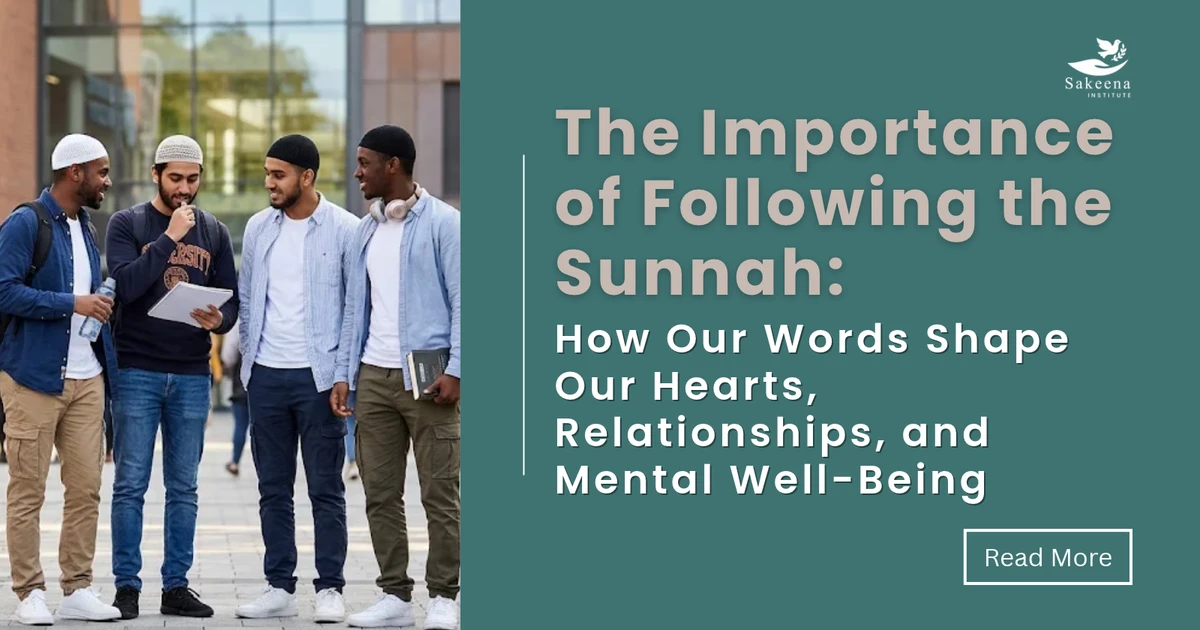

Following the Sunnah is not simply about observing a collection of religious practices or preserving traditions passed down through generations. It is about allowing the example of Prophet Muhammad ﷺ to shape the way we live, think, speak, worship, and interact with the world around us. It is about recognizing that Allah, in His infinite wisdom and mercy, did not leave humanity to search for the path of righteousness without guidance. He sent His Messenger ﷺ as a living example of what it means to worship Him, embody good character, and navigate the different circumstances of life with faith and sincerity.
For a believer, the Sunnah is much more than a reference for religious obligations. It is a source of direction, reassurance, and spiritual nourishment. It teaches us how to approach our relationship with Allah, how to treat those around us, how to respond to hardship, and even how to approach the smallest details of our daily routines. When we begin to understand the depth of the Sunnah, we realize that following the Prophet ﷺ is not an additional burden placed upon an already demanding life; rather, it is a means through which ordinary moments can become acts of worship.
The Sunnah Is a Path to the Love of Allah
Perhaps one of the most beautiful reasons to follow the Sunnah is that Allah Himself has made it a means of attaining His love. In the Qur'an, Allah says:
قُلْ إِن كُنتُمْ تُحِبُّونَ اللَّهَ فَاتَّبِعُونِي يُحْبِبْكُمُ اللَّهُ وَيَغْفِرْ لَكُمْ ذُنُوبَكُمْ ۗ وَاللَّهُ غَفُورٌ رَّحِيمٌ
"Say, [O Muhammad], 'If you should love Allah, then follow me, [so] Allah will love you and forgive you your sins. And Allah is Forgiving and Merciful." (Qur'an 3:31)
This verse establishes a profound connection between loving Allah and following His Messenger ﷺ. Love is not merely a feeling that we claim to carry in our hearts; it is something that becomes visible through our choices, priorities, and actions. If we genuinely desire the pleasure of Allah, we should seek to follow the person whom He chose to guide humanity.
There is also something deeply reassuring in this promise. We may spend much of our lives searching for ways to become closer to Allah, wondering which deeds will bring us nearer to Him and how we can improve our relationship with our Creator. Yet Allah has given us a clear direction: follow His Messenger ﷺ, and you will attain His love and forgiveness.
The importance of following the Sunnah in Islam therefore goes beyond imitation. It is an expression of love, obedience, and a sincere desire to walk the path that Allah has chosen for His servants.
The Prophet ﷺ Was Sent as Our Example
Allah did not send the Prophet Muhammad ﷺ merely to deliver a message that humanity would read and study. He sent him as an example to be followed and a model through which the teachings of Islam could be understood and practiced.
Allah says:
لَّقَدْ كَانَ لَكُمْ فِي رَسُولِ اللَّهِ أُسْوَةٌ حَسَنَةٌ لِّمَن كَانَ يَرْجُو اللَّهَ وَالْيَوْمَ الْآخِرَ وَذَكَرَ اللَّهَ كَثِيرًا
"There has certainly been for you in the Messenger of Allah an excellent pattern for anyone whose hope is in Allah and the Last Day and [who] remembers Allah often." (Qur'an 33:21)
The Prophet ﷺ demonstrated what patience looks like when faced with rejection, what mercy looks like when given the opportunity to retaliate, and what gratitude looks like even when life presents difficulties. His life provided practical answers to questions that believers continue to face centuries later.
We learn how to worship Allah through his prayer, how to maintain family relationships through his treatment of his wives and relatives, and how to approach hardship through his perseverance and reliance upon Allah. His interactions with children, neighbors, companions, and even those who opposed him provide lessons in character that remain relevant in every generation.
Following the Sunnah of Prophet Muhammad ﷺ allows us to move beyond understanding Islamic teachings as abstract principles and begin embodying them in our everyday lives.
The Sunnah Transforms Ordinary Actions into Worship
One of the remarkable aspects of the Sunnah is how it gives meaning to the smallest details of human life. Islam is not confined to the mosque, the prayer mat, or specific hours dedicated to worship. Rather, it offers guidance for the entirety of our existence.
The Prophet ﷺ taught us to begin eating by mentioning the name of Allah, to eat with our right hand, to greet others with salaam, to maintain cleanliness, and to remember Allah before sleeping and upon waking. These actions may appear small when considered individually, yet they cultivate a continuous awareness of Allah throughout the day.
Consider the difference between eating simply to satisfy hunger and eating while remembering Allah, observing the manners taught by His Messenger ﷺ, and expressing gratitude for the provision He has granted. The physical action may be identical, but the intention and manner in which it is performed give it an entirely different spiritual dimension.
The Prophet ﷺ said:
"Every good deed is charity." (Sahih al-Bukhari 6021; Sahih Muslim 1009)
This teaching reminds us that goodness is not restricted to grand gestures or extraordinary acts of worship. A kind word, a sincere smile, helping someone with a task, and removing something harmful from the road can all become acts of charity.
Through the daily Sunnah practices, we begin to realize that opportunities for worship are woven into the ordinary fabric of our lives. We do not need to wait for a special occasion to draw closer to Allah. We can begin with the way we speak, eat, sleep, work, and interact with those around us.
Following the Sunnah Protects Us from Religious Extremes and Innovation
In an age where information is constantly available and religious opinions can be encountered from countless sources, it is increasingly important to have a reliable standard by which we understand and practise our religion.
The Qur'an and the authentic Sunnah provide that foundation. Rather than approaching worship according to personal preferences, cultural expectations, or assumptions about what might bring us closer to Allah, we are encouraged to follow the guidance established by the Messenger ﷺ.
The Prophet ﷺ said:
"Whoever introduces into this matter of ours something that does not belong to it, it will be rejected." (Sahih al-Bukhari 2697; Sahih Muslim 1718)
This hadith reminds us that sincerity alone does not make an action an accepted act of worship. Our deeds must also be in accordance with the guidance of the Prophet ﷺ.
A person may have a sincere desire to worship Allah, but sincerity should be accompanied by knowledge and adherence to authentic guidance. This is why learning the Sunnah, understanding its evidence, and distinguishing authentic teachings from unreliable narrations are so important.
At the same time, following the Sunnah requires knowledge, wisdom, and an understanding of the different categories of Prophetic guidance. Not every Sunnah carries the same legal ruling, and scholars have carefully explained the distinctions between obligatory acts, recommended practices, and other forms of Prophetic guidance.
The objective is not to burden ourselves or others with unnecessary hardship, but to worship Allah upon knowledge and follow the Messenger ﷺ as faithfully as we can.
The Sunnah Teaches Us the Beauty of Good Character
Perhaps one of the most overlooked aspects of following the Sunnah is its emphasis on character. Sometimes, people associate practising the Sunnah primarily with outward appearances and visible religious practices, overlooking the profound importance the Prophet ﷺ placed on how we treat others.
He was gentle without being weak, forgiving without compromising the truth, and generous even when he had little to give. He listened to people, honored their feelings, fulfilled their rights, and treated others with dignity.
Allah describes his character beautifully:
وَإِنَّكَ لَعَلَىٰ خُلُقٍ عَظِيمٍ
"And indeed, you are of a great moral character." (Qur'an 68:4)
The Prophet ﷺ also said:
"The most complete of the believers in faith are those with the best character." (Jami' al-Tirmidhi 1162)
This is an important reminder that following the Sunnah should be reflected in our homes, marriages, friendships, workplaces, and interactions with strangers.
It is reflected in the way we respond when someone makes a mistake, how we behave when we are angry, whether we fulfil our promises, and whether our words bring comfort or hurt to others.
It is possible to pay great attention to certain outward practices while neglecting the character that the Prophet ﷺ so beautifully demonstrated. True commitment to his Sunnah should encourage us to examine both our worship and our treatment of people.
The Sunnah Brings Comfort During Difficult Times
Life inevitably brings moments of uncertainty, grief, disappointment, and hardship. During these moments, the life of the Prophet ﷺ becomes an extraordinary source of guidance.
He experienced the loss of loved ones, endured rejection, faced persecution, and witnessed difficult circumstances that would have overwhelmed many people. Yet throughout his life, he remained devoted to Allah, turning to Him in prayer, expressing gratitude, exercising patience, and maintaining hope in His mercy.
When we follow the Sunnah during difficult moments, we learn that patience does not mean pretending that we are not hurting. It means remaining connected to Allah even when our circumstances are painful.
We learn to seek refuge in Allah when overwhelmed, make du'a when we are uncertain, and remember that every hardship exists within the knowledge and wisdom of our Creator.
The Prophet ﷺ taught us to say:
إِنَّا لِلَّهِ وَإِنَّا إِلَيْهِ رَاجِعُونَ
"Indeed we belong to Allah, and indeed to Him we will return." (Qur'an 2:156)
These words are not merely an expression reserved for moments of death or tragedy. They remind us of our true relationship with Allah: we belong to Him, our affairs are in His hands, and our ultimate return is to Him.
The Prophetic Sunnah offers us a way to navigate life's difficulties without allowing our circumstances to disconnect us from our purpose.
Small Consistent Acts Can Bring Us Closer to the Prophet ﷺ
Embracing the Sunnah does not require us to transform every aspect of our lives overnight. In fact, one of the most beautiful teachings of the Prophet ﷺ is the importance of consistency in good deeds.
Aishah رضي الله عنها narrated that the Messenger of Allah ﷺ was asked which deed was most beloved to Allah. He replied:
"The most regular constant deeds, even though they may be few." (Sahih al-Bukhari 6464)
This hadith offers an important lesson for anyone who wishes to revive their relationship with the Sunnah. Rather than attempting to introduce dozens of practices into our daily routines and becoming overwhelmed, we can begin with a few authentic Sunnah acts and strive to maintain them.
We might begin by observing the Sunnah prayers, maintaining our morning and evening adhkar, remembering Allah before sleeping, or making a conscious effort to follow the Prophet's ﷺ manners when interacting with others.
We can also dedicate time to learning about his life, studying his authentic hadith, and understanding the wisdom behind his teachings.
Over time, these small practices can reshape our habits and priorities. What initially requires conscious effort may eventually become a natural part of our daily lives.
Reviving the Sunnah Is an Expression of Love
There is something deeply beautiful about following the example of someone you love. When we genuinely love the Prophet Muhammad ﷺ, we naturally desire to know more about him: how he worshipped, how he spoke, how he treated his family, what brought him happiness, and how he responded to the different circumstances of life.
Our love should inspire us to learn about him rather than remain satisfied with simply knowing about him. We should strive to make his teachings visible in our conduct and allow his example to influence the decisions we make.
The Prophet ﷺ said:
"None of you will have faith till he loves me more than his father, his children and all mankind." (Sahih al-Bukhari 15; Sahih Muslim 44)
Loving him means honouring his teachings, defending his authentic Sunnah, sending abundant salawat upon him, and striving to follow the path he left for his Ummah.
It also means recognising that we will not always be perfect. There will be days when we fall short, forget, become distracted, or struggle to maintain certain practices. But the response should never be to abandon the journey. Instead, we return, renew our intentions, seek knowledge, and continue striving.
Ultimately, following the Sunnah is a lifelong journey of love, obedience, and self-improvement. It is an opportunity to bring the guidance of the Prophet ﷺ into every corner of our lives, allowing our worship, character, relationships, and everyday habits to reflect the teachings he left behind.
May Allah grant us the ability to love His Messenger ﷺ sincerely, understand his Sunnah correctly, follow his example faithfully, and be gathered among those who will be closest to him on the Day of Judgement. Ameen.