
In recent years, conversations around mental health have opened up in meaningful ways, and many Muslims are rediscovering something deeply comforting: faith has always been a source of emotional strength. At the heart of this shift is a growing awareness that spiritual connection and mental wellbeing are not separate journeys. They can support and strengthen one another.
Understanding Anxiety Through an Islamic Lens
When we reflect on anxiety through the Quran, one thing becomes clear: emotional struggle is part of being human. Feelings of fear, worry, and uncertainty are not signs of weak faith. They are experiences acknowledged within Islamic teachings.
Rather than dismissing these emotions, the Quran offers reassurance and guidance. It teaches believers how to move through difficult moments with patience, trust, and hope, gently guiding the heart back to a place of calm.
Even the Prophets experienced moments of grief and hardship. Their stories remind us that struggle does not contradict faith. It is often where faith deepens.
Words of Comfort from the Quran
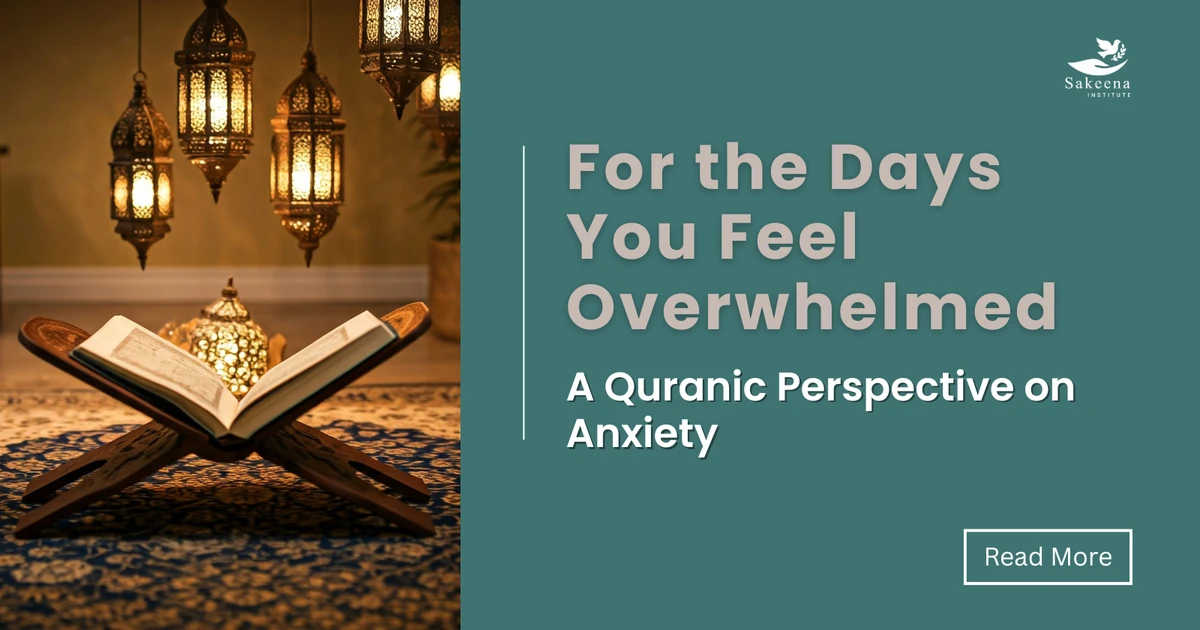
The Quran offers powerful reminders for anyone feeling overwhelmed:
لَا يُكَلِّفُ اللَّهُ نَفْسًا إِلَّا وُسْعَهَا
“Allah does not burden a soul beyond what it can bear.” (2:286)
This verse reassures believers that their struggles, no matter how heavy, are within their capacity to endure.
أَلَا بِذِكْرِاللَّهِ تَطْمَئِنُّ الْقُلُوبُ
“Verily, in the remembrance of Allah do hearts find rest.” (13:28)
A simple yet profound truth: reconnecting with Allah brings a sense of calm that nothing else can replace.
إِنَّ مَعَ الْعُسْرِ يُسْرًا
“Indeed, with hardship comes ease. Indeed, with hardship comes ease.” (94:5–6)
A promise repeated for emphasis—no hardship lasts forever, and ease is always part of the journey.
These verses don’t just comfort; they reshape how we understand hardship, reminding us that relief and mercy are always near.
Spiritual Tools for Inner Peace
Islam offers practical and gentle ways to cope with anxiety and restore balance:
Tawakkul (trust in Allah): Letting go of the need to control everything while still taking meaningful steps forward.
Sabr (patience): Remaining steady through hardship, trusting that relief will come.
Dhikr (remembrance): Simple phrases that ground the heart and shift focus away from worry.
Salah (prayer): Built-in pauses throughout the day to reconnect, reflect, and find calm.
These are not only acts of worship. They are anchors for emotional stability.
A Holistic View: Heart, Self, and Soul
Islamic psychology offers a meaningful way to understand emotional struggles by looking at the whole person:
The qalb (heart): The center of spiritual awareness and emotional balance.
The nafs (self): Where inner struggles, desires, and conflicts take place.
The ruh (soul): The spiritual essence that connects us to Allah.
When these are nurtured together, emotional resilience becomes stronger and more sustainable.
Faith as a Source of Strength
For many, one of the most powerful ways to cope with anxiety is by turning to Allah directly. Making dua creates a space to release worries, express fears, and feel heard.
Gratitude also plays a transformative role. Even during difficult times, recognizing small blessings can gently shift perspective and ease emotional tension.
Islam doesn’t ask us to ignore our struggles. It teaches us how to carry them with strength, awareness, and hope.
Support That Understands You
Today, there is a growing need for mental health support that respects both emotional and spiritual needs. Faith-based counseling offers exactly that: Combining psychological tools with Islamic guidance in a way that feels authentic and comforting.
Institutions like Sakeena Institute are part of this shift, creating safe spaces where individuals can heal without feeling disconnected from their faith.
You’re Not Alone in This
Experiencing anxiety doesn’t mean your faith is weak. It means you’re human.
Islam reminds us that hardship is part of life…but so is mercy, ease, and support. Through reflection, spiritual practice, and compassionate guidance, it’s possible to find balance again.
If you or someone you love is struggling, know that help is available and healing can begin with a single step back toward Allah.