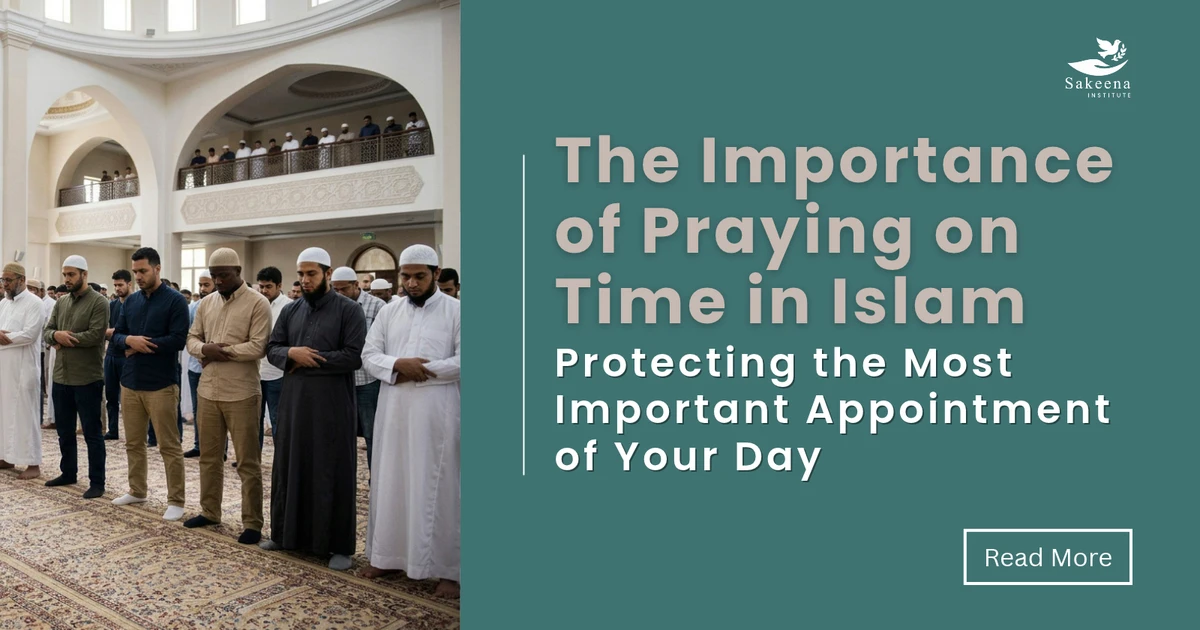

Every day, we make appointments. We arrange our schedules around work, responsibilities, family commitments, meetings, and the many demands of everyday life. We become conscious of the time, make room for what matters, and sometimes rearrange everything to avoid missing something important. Yet, among all the appointments we make, there is one that deserves more attention than anything else: our appointment with Allah.
The five daily prayers are not simply religious tasks to be squeezed into an already busy schedule. They are the foundation around which a Muslim's day should be built. They are moments in which we leave behind the distractions of this world, stand before our Creator, remember why we were created, and renew our connection with Him.
Praying on time in Islam is not merely about completing an obligation. It reflects the place Allah occupies in our hearts and the priorities we choose to establish in our lives. When we understand the significance of Salah, we begin to see that the question is not how to find time for prayer, but how we could possibly allow anything to take priority over it.
Salah Is an Appointment With Allah
Allah describes the believers who are successful in the Qur'an:
قَدْ أَفْلَحَ الْمُؤْمِنُونَ الَّذِينَ هُمْ فِي صَلَاتِهِمْ خَاشِعُونَ
"Successful indeed are the believers: those who humble themselves in their prayer." (Surah Al-Mu'minun, 23:1–2)
Notice that Allah begins this description of successful believers by mentioning their prayer. Salah is not an insignificant part of a Muslim's identity. It is central to the life of a believer.
In another verse, Allah says:
إِنَّ الصَّلَاةَ كَانَتْ عَلَى الْمُؤْمِنِينَ كِتَابًا مَوْقُوتًا
"Indeed, prayer has been decreed upon the believers a decree of specified times." (Surah An-Nisa, 4:103)
The wording is important. Allah did not simply command us to pray; He established specific times for each prayer. This teaches us that the timing of Salah is part of the obligation itself.
A Muslim who deliberately delays prayer without a valid excuse should not treat the matter lightly. There is a difference between praying within the prescribed time and allowing a prayer to pass until its time has ended.
The five prayers are recurring appointments with the One who created us, sustains us, and provides for us. We should not approach these appointments as interruptions to our day. Rather, everything else should find its place around them.
The Most Beloved Deeds to Allah
One of the most beautiful hadiths highlighting the importance of praying on time is narrated by Abdullah ibn Mas'ud رضي الله عنه.
He asked the Messenger of Allah ﷺ:
"Which deed is most beloved to Allah?"
The Prophet ﷺ replied:
"Prayer at its proper time."
He then asked, "Then what?"
The Prophet ﷺ replied, "Kindness to parents."
He asked, "Then what?"
The Prophet ﷺ replied, "Jihad in the way of Allah."
(Sahih al-Bukhari 527; Sahih Muslim 85)
Consider the significance of this answer. When the Prophet ﷺ was asked about the deeds most beloved to Allah, he placed prayer at its proper time first.
We sometimes imagine that drawing closer to Allah requires extraordinary acts, lengthy programmes of worship, or accomplishments that others can see. Yet one of the most beloved deeds is something we have the opportunity to perform every single day.
Five times a day, we are given the opportunity to demonstrate our devotion through a simple but profound act: responding to Allah's call without allowing worldly distractions to take precedence.
Delaying Salah: What Are We Prioritizing?
One of the greatest challenges of maintaining prayer is not necessarily a lack of knowledge about its importance. Many Muslims know that Salah is obligatory, understand its position in Islam, and sincerely wish to maintain it. Yet they repeatedly find themselves saying, "I'll pray in a few minutes."
A task appears, a conversation continues, a television programme is unfinished, or the phone captures our attention. We postpone Salah, assuming that we will return to it shortly.
Sometimes those few minutes become an hour. Sometimes the prayer is delayed until just before its time expires. And sometimes, regrettably, its time passes altogether.
It is worth asking ourselves an uncomfortable but necessary question: What are we teaching our hearts when everything else receives immediate attention, while our appointment with Allah is repeatedly postponed?
This is not about dismissing legitimate responsibilities or pretending that life has no demands. Rather, it is about recognising that the demands of this world must not consistently displace the obligation that connects us to our Creator.
Allah reminds us:
فَوَيْلٌ لِلْمُصَلِّينَ الَّذِينَ هُمْ عَنْ صَلَاتِهِمْ سَاهُونَ
"So woe to those who pray, but are heedless of their prayer." (Surah Al-Ma'un, 107:4–5)
The verses remind us that the outward performance of prayer must be accompanied by genuine attentiveness and care. We should be concerned not only with whether we pray, but also with how we approach this obligation.
Salah Protects the Heart From the Distractions of This World
One of the remarkable blessings of the five daily prayers is that they repeatedly interrupt our attachment to worldly life.
Between Fajr and Dhuhr, we become occupied with our responsibilities. Between Dhuhr and Asr, we continue navigating the demands of the day. Between Asr and Maghrib, we may become consumed by unfinished tasks. And between Maghrib and Isha, our attention can easily drift towards entertainment, family activities, and preparation for tomorrow.
Without Salah, hours can pass without a meaningful moment of remembrance.
But Allah, through His mercy, has prescribed five daily prayers that bring us back to Him.
Allah says:
وَأَقِمِ الصَّلَاةَ لِذِكْرِي
"And establish prayer for My remembrance." (Surah Ta-Ha, 20:14)
Salah brings the heart back to its purpose. It reminds us that our identities are not defined by our productivity, achievements, possessions, or the opinions of others.
We are servants of Allah before we are anything else.
And perhaps one of the greatest blessings of praying on time is that it prevents the world from occupying our hearts uninterrupted. No matter how demanding the day becomes, we are repeatedly reminded that there is something greater than everything we are pursuing.
The First Matter We Will Be Accountable For
The importance of Salah becomes even more apparent when we consider that it will be the first deed about which a servant is questioned on the Day of Judgement.
The Messenger of Allah ﷺ said:
"Indeed, the first deed for which a servant will be called to account on the Day of Resurrection is his prayer. If it is sound, then he has succeeded and prospered. But if it is defective, then he has failed and lost."
(Sunan Abi Dawud 864; Jami' al-Tirmidhi 413)
This hadith should change the way we think about our daily priorities.
We spend considerable time thinking about our futures, planning our careers, organizing our finances, and working towards goals that we hope will bring us security and happiness. Yet, how much attention do we give to the very deed that will be among the first things examined when we stand before Allah?
Our achievements in this world will eventually become part of our past. Our positions, qualifications, possessions, and accomplishments will not accompany us into our graves. But our Salah is among the deeds we carry forward.
This does not mean that worldly responsibilities are unimportant. Islam encourages us to fulfil our responsibilities and contribute positively to society. However, none of these pursuits should cause us to neglect the obligation that stands at the centre of our relationship with Allah.
Praying on Time Is a Sign of Love and Commitment
Love is often demonstrated through consistency. We make time for the people and things that matter to us. We remember important occasions, honour our commitments, and try not to neglect those who deserve our attention.
The relationship between a servant and Allah is infinitely greater than any worldly relationship.
Allah does not need our prayers. We are the ones who need Him. He is Al-Ghani, the Self-Sufficient, while we are entirely dependent upon His mercy, guidance, and provision.
Every time we stand for Salah, we acknowledge this dependence. Every time we respond to the Adhan, we demonstrate that our relationship with Allah is not something we intend to maintain only when life is convenient.
A believer does not wait until feeling spiritually motivated to pray. Rather, they pray because Allah has commanded them to, and through that consistency, they hope to develop a deeper love for worship.
There will be days when Fajr feels difficult, when exhaustion makes Isha challenging, and when the responsibilities of the day leave us mentally distracted. Yet, these are precisely the moments when our commitment to Salah becomes meaningful.
We should not allow our feelings to determine whether we fulfil an obligation. Instead, we ask Allah to grant us the sweetness of worship and help us remain steadfast.
Practical Ways to Become Consistent With Salah
Establishing a habit of praying on time requires intention, effort, and practical changes to our daily routines. Rather than relying solely on motivation, we can make small adjustments that help protect our prayers.
- Organise your day around Salah. Begin by identifying the five prayer times and arranging your responsibilities accordingly. Instead of waiting for a convenient moment, make Salah the fixed point around which the rest of your schedule revolves.
- Respond to the Adhan promptly. When you hear the call to prayer, try to leave what you are doing and prepare for Salah. Avoid repeatedly telling yourself that you will pray later.
- Prepare for Fajr the night before. Sleep at a reasonable time, set an alarm, and take the necessary steps to make waking up easier. Protecting Fajr often begins several hours before its time arrives.
- Keep your prayer clothes and prayer mat accessible. Removing unnecessary obstacles makes it easier to respond to prayer time without turning preparation into another reason for delay.
- Use reminders wisely. Prayer applications and notifications can help you remain conscious of the approaching prayer times, particularly when you are occupied with work or other responsibilities.
- Do not allow one missed prayer to become a pattern. If you fall short, repent, fulfil the missed obligation according to its rulings, and return to consistency. Do not allow guilt to convince you that there is no point in trying again.
- Ask Allah for steadfastness. Consistency is ultimately a blessing from Allah. Make du'a regularly and recognise that maintaining worship is itself something for which we need His help.
Allah says:
وَأْمُرْ أَهْلَكَ بِالصَّلَاةِ وَاصْطَبِرْ عَلَيْهَا
"And enjoin prayer upon your family and be steadfast therein." (Surah Ta-Ha, 20:132)
Notice the instruction to be steadfast. Maintaining Salah requires patience, perseverance, and continued effort. It is not something we establish once and assume will remain effortless forever.
Do Not Let Your Shortcomings Keep You Away From Salah
An important reminder for anyone struggling with consistency is that we should never allow our shortcomings to become a reason for abandoning prayer altogether.
Some people delay returning to regular Salah because they feel ashamed of how long they have neglected it. Others struggle with concentration, feel spiritually distant, or become discouraged because they cannot maintain the level of devotion they wish to achieve.
But the answer is never to move further away from Allah.
Salah is not a reward reserved for those who have perfected themselves. It is an obligation, a means of seeking Allah's mercy, and one of the greatest opportunities to return to Him.
Allah says:
قُلْ يَا عِبَادِيَ الَّذِينَ أَسْرَفُوا عَلَى أَنْفُسِهِمْ لَا تَقْنَطُوا مِنْ رَحْمَةِ اللَّهِ
"Say, 'O My servants who have transgressed against themselves, do not despair of the mercy of Allah.'" (Surah Az-Zumar, 39:53)
If you have been careless with your prayers, begin again. If you have repeatedly delayed them, work towards changing that habit. If your heart feels distracted, continue standing before Allah and ask Him to grant you khushu'.
Do not wait until you become a better Muslim to become consistent with Salah. Consistency in Salah is one of the ways through which you seek to become a better Muslim.
Conclusion: Let Salah Be the Centre of Your Day
At the end of our lives, we will not wish that we had spent more time scrolling through our phones, finishing unnecessary tasks, or attending to every worldly distraction that demanded our attention.
We will understand the value of every moment spent in obedience to Allah.
The five daily prayers are among the greatest blessings granted to us. They are opportunities to seek forgiveness, express gratitude, ask for guidance, and renew our commitment to the One who created us.
Let us stop treating Salah as something that must fit into whatever time remains after everything else. Let us instead build our days around it.
When Fajr arrives, respond. When Dhuhr calls, pause. When Asr approaches, remember your appointment. When Maghrib enters, leave behind your distractions. And when Isha arrives, end your day with remembrance of Allah.
We do not know how many more Adhans we will hear, how many more opportunities we will have to stand in prayer, or which Salah will be our last.
May Allah make us among those who establish their prayers with sincerity, humility, and consistency, who guard their appointed times, and who find comfort in standing before Him.
آمين