mental health
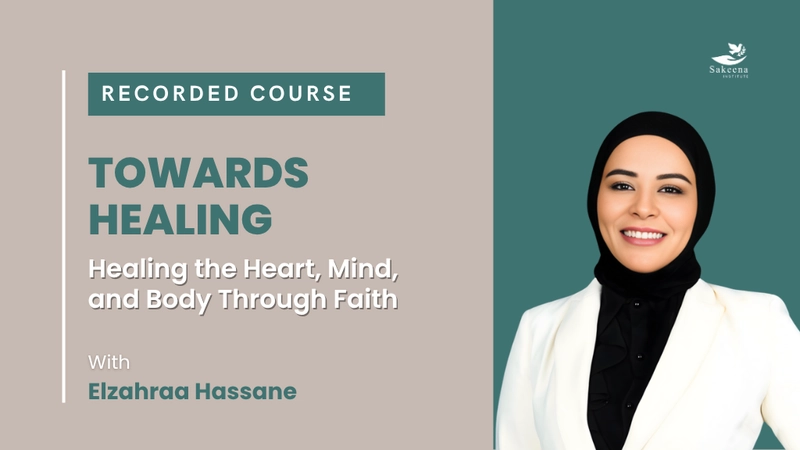
Towards Healing: Healing the Heart, Mind, and Body through Faith
by Elzahraa Hassane
$40.00recorded
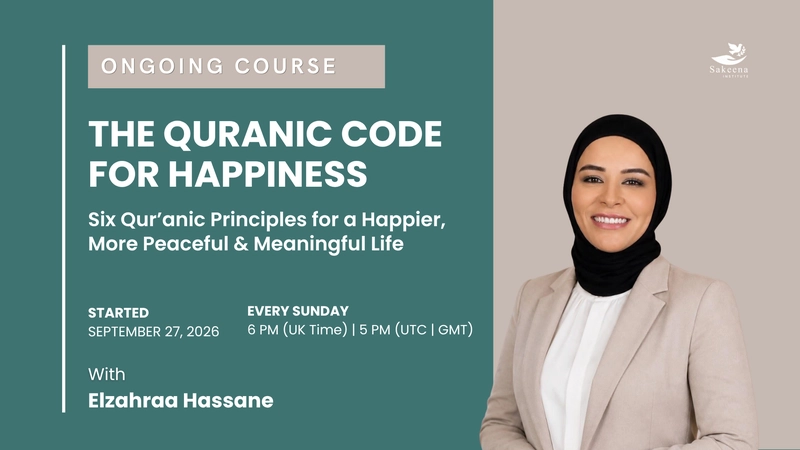
Six Qur’anic Principles for a Happier, More Peaceful & Meaningful Life
16 lessons • 6 weeks
1 lessons • 120 min
3 lessons • 120 min
3 lessons • 119 min
3 lessons • 120 min
3 lessons • 120 min
2 lessons • 120 min
1 lessons • 120 min
Six live sessions | Every Sunday from 27 September 2026 | 6:00 PM UK time (5:00 PM UTC)
You want to start with “What is happiness?” and reveal that almost everything we chase is actually a means to one end: a feeling inside the heart. Then the Qur’anic principles become the answer. I’d make it sound very natural on the mic:
What is happiness?
Have you ever really thought about it?
We spend so much of our lives trying to get happiness.
We want more money.
We want the relationship.
We want the success.
We want the house, the car, the achievement…
But why?
Because of how we think they will make us feel.
At the end of all that chasing…
what we are really chasing is a feeling inside the heart.
We want to feel peace.
We want to feel secure.
We want to feel loved.
We want to feel content.
We want to feel that life is good.
And here is the question that changed the way I think about happiness:
What if Allah has already taught us how to build those feelings within the heart, without waiting for life to give us everything we want?
Over six weeks, we will build this Qur’anic Code for Happiness, one principle at a time.
This is where you establish yaqīn (certainty) and ḥusn al-ẓann billāh (thinking well of / expecting good from Allah). Before I can rely upon Allah, I need to know Who I am relying upon. I believe in His wisdom, mercy, knowledge, power, and goodness, even when I cannot understand what He is doing.
Your Practice for the Week: Building Yaqīn
أَلَا بِذِكْرِ اللَّهِ تَطْمَئِنُّ الْقُلُوبُ
“Surely, in the remembrance of Allah do hearts find tranquillity.”
Qur’an 13:28
We spend our lives changing external circumstances in search of an internal feeling. This week explores iṭmiʾnān — tranquillity of the heart — and how remembrance and connection with Allah create a deeper source of inner stability.
Your Practice for the Week: Cultivating Tranquillity
The heart can possess much and still experience life through the lens of what is missing. Gratitude changes that lens. Explore how shukr redirects attention from deprivation to blessing, protects us from endless comparison, and allows us to experience more deeply what Allah has already placed in our lives.
Your Practice for the Week: Training the Heart to Notice
There will always be more to want and things in life we cannot control. Qanāʿah teaches us to be content with what Allah has given, while Riḍā teaches us to be at peace with what Allah has decreed. Learn to pursue growth without making your happiness dependent on having more or life going exactly as planned.
Your Practice for the Week: Practising Enoughness
Some of our greatest distress comes from trying to control outcomes that were never fully ours to control. Explore tawakkul, qadr, acceptance and certainty in Allah when duʿāʾ is delayed, plans collapse or life takes an unexpected direction. Learn to do what is within your control — and entrust what is beyond it to Allah.
Your Practice for the Week: Releasing What You Cannot Control
Happiness becomes fragile when feeling happy becomes the purpose of life itself. The Qur’an gives human life something greater: ʿibādah, purpose, contribution, growth and meaningful action. Discover how living according to purpose — rather than constantly chasing a feeling — creates a deeper and more sustainable sense of fulfilment.
Your Practice for the Week: Living With Purpose
Across the six weeks, these principles come together:
Īmān. Dhikr. Shukr. Qanāʿah. Tawakkul. Purposeful Action.
By the final session, you will create your own Qur’anic Happiness Plan, a practical personal framework for applying these principles beyond the programme.
The aim is not to become happy every moment.
The aim is to build a heart that knows where its peace comes from, what truly matters, how to respond when life changes, and where to return when that peace is shaken.
Complete all course modules to earn your verified certificate and showcase your achievement.
Create a free account or log in to submit your application for The Quranic Code for Happiness.
You have access to this course
Go to courseA space to ask questions, share reflections, and connect with others going through the same course alongside your instructor.

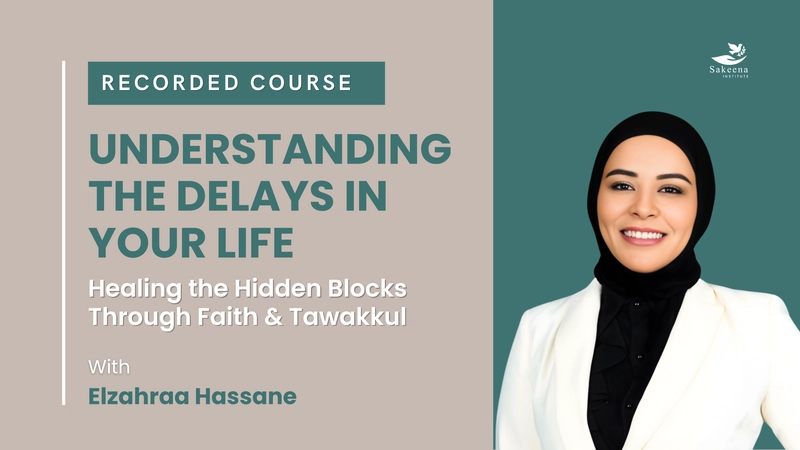
Elzahraa Hassane is the Founder and Executive Director of "Sakeena Institute", an international educational platform dedicated to integrating authentic Islamic knowledge with contemporary psychology, neuroscience, and education to promote emotional well-being, resilience, and personal growth. She is a Doctoral Researcher in Education, with research focusing on the integration of faith-based education, emotional resilience, and psychological well-being. She has also completed the taught component of the MSc in Neuroscience and Psychology of Mental Health at the University of Warwick. She holds a Master of Education (M.Ed.), the University of Exeter (UK), a "Master's degree in Islamic Studies" from Middlesex University, UK., and a "Master's degree in Applied Linguistics, a linguistic comparison between English and Arabic", University of Tanta, Egypt. As a Certified Mental Health Consultant, Elzahraa combines academic research with practical application, bridging Islamic psychology, neuroscience, education, and emotional healing to develop evidence-informed programmes that help individuals strengthen their faith, build emotional resilience, and improve psychological well-being. Through Sakeena Institute, she has designed and delivered educational programmes for a global audience, making complex concepts in psychology, neuroscience, and Islamic scholarship accessible, practical, and transformative. Alongside her academic work, she is an international educator, speaker, author, and content creator whose educational content has reached more than 500,000 people across digital platforms. Her mission is to reconnect individuals with faith as the foundation for emotional healing, personal growth, and lasting inner peace.
by Elzahraa Hassane
by Elzahraa Hassane